JOIN JANE CONTINUING TO MAKE SENSE OF ART
And this month Jane is exploring Abstract Art.
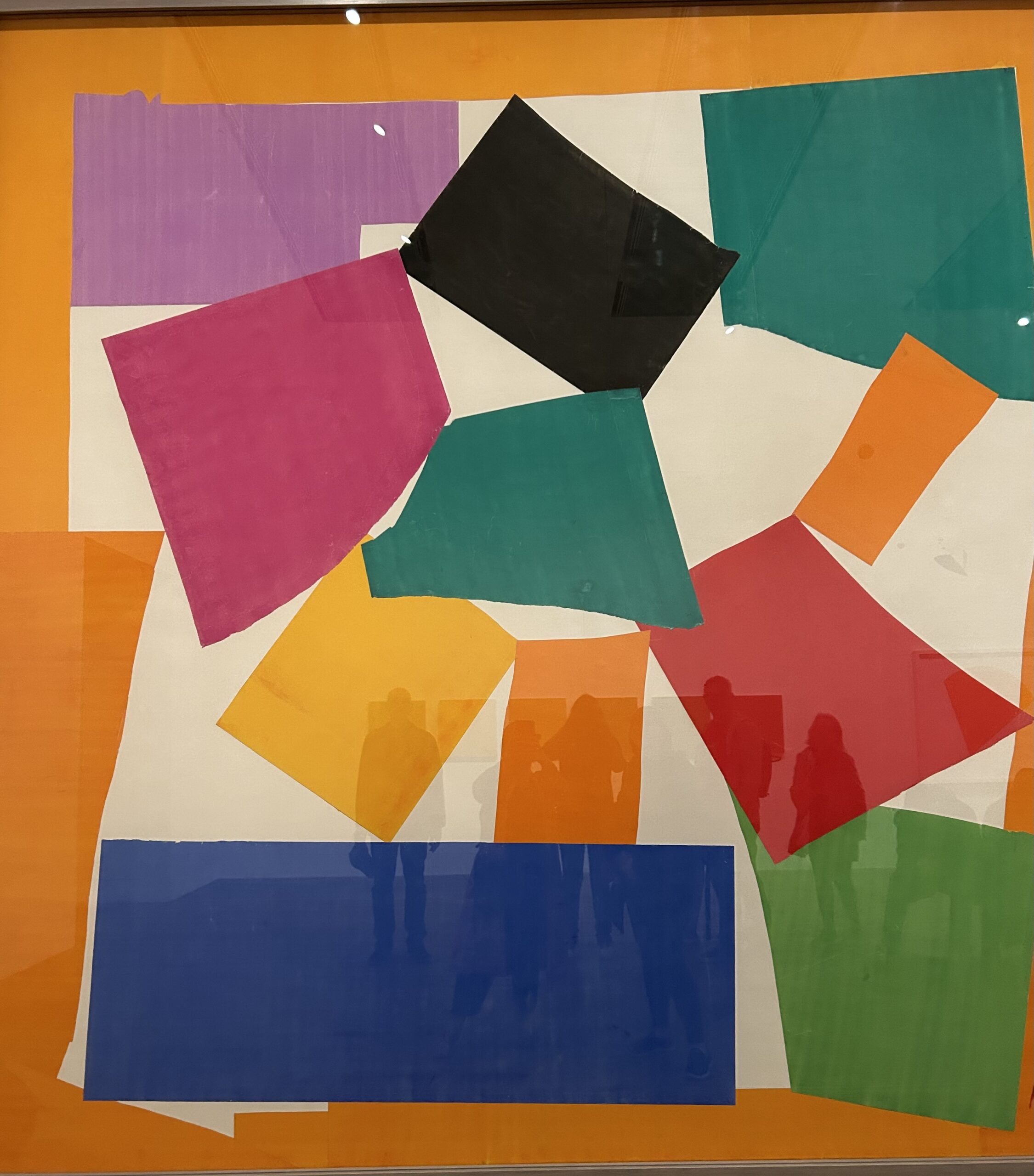
How often have you visited an art gallery and said to yourself or whomever you are with, “What’s the point of that?” or “My 2 year old does better than that at play school.”? I think we have all done it – probably many times, particularly when we are looking at abstract art. We simply don’t understand it – what are we meant to be seeing? What are we meant to be feeling? So we walk by quicky – probably feeling rather inadequate, maybe embarassed – which has certainly been my response for as long as I can remember. The picture below is ‘The Snail’ By Henri Matisse – gouache on paper, which he then cut out into shapes and pasted on the paper. Once you know it’s called ‘The Snail’ you can see the spiral shape that the pieces of paper create and get where he’s coming from. Until I read the title I didn’t have a clue but my response was positive – I liked the colours and the irregular shapes – I would have given it house room!
I think knowing a little about abstract art and its place as one of the pillars of modern and contemporary art can help us understand what is going on – even if it doesn’t necessarily help us like it – but maybe it will!
Abstract art is art that does not attempt to represent reality in an accurate depiction, instead using shapes, colours, forms and gestural marks to achieve its effect. It has been around since the early 1900s, growing from the Impressionist movement where art was becoming less representational and less objective. It really took off after the 1st World War when there was a need to escape reality – the grim reality of a post war world.
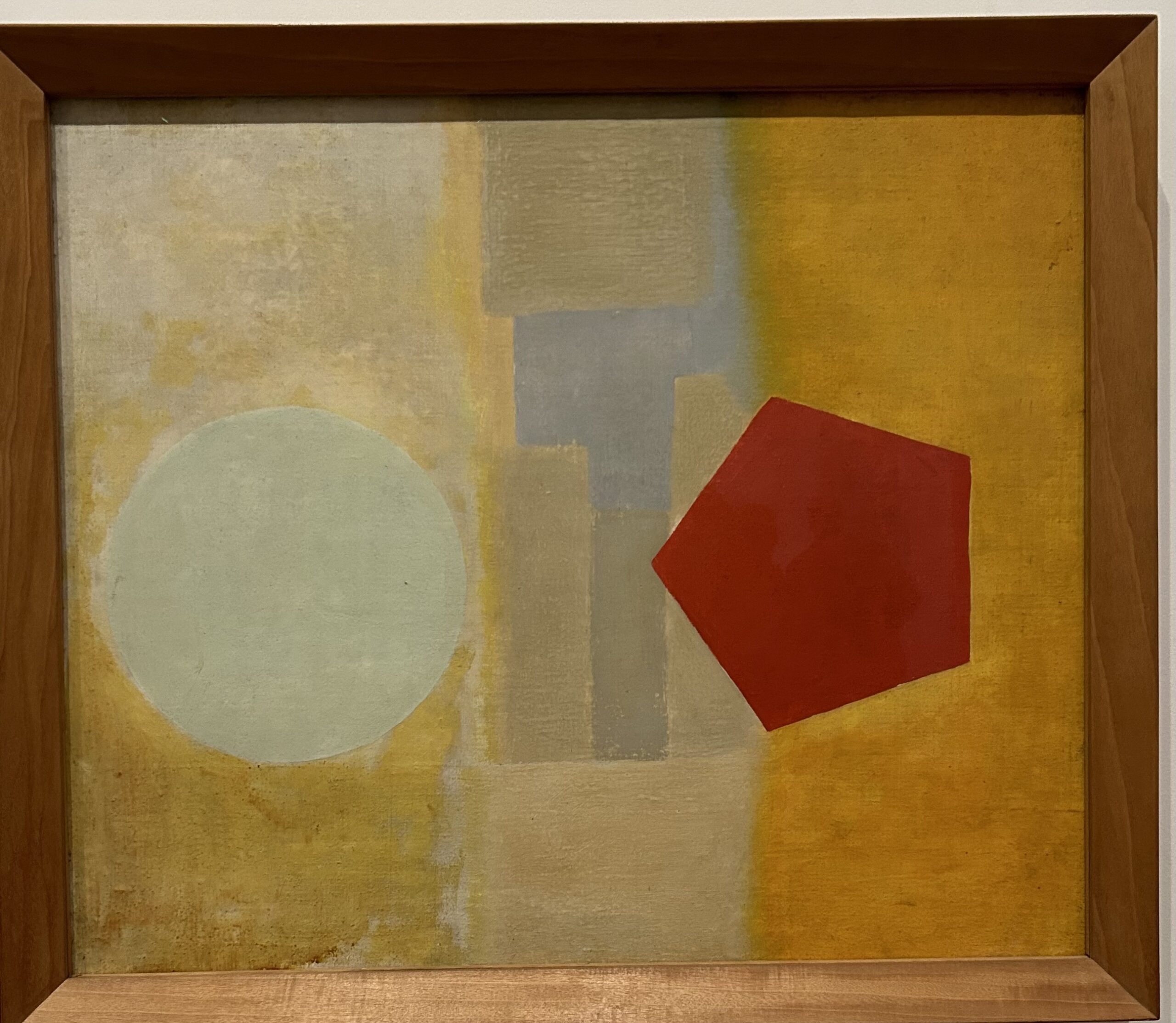
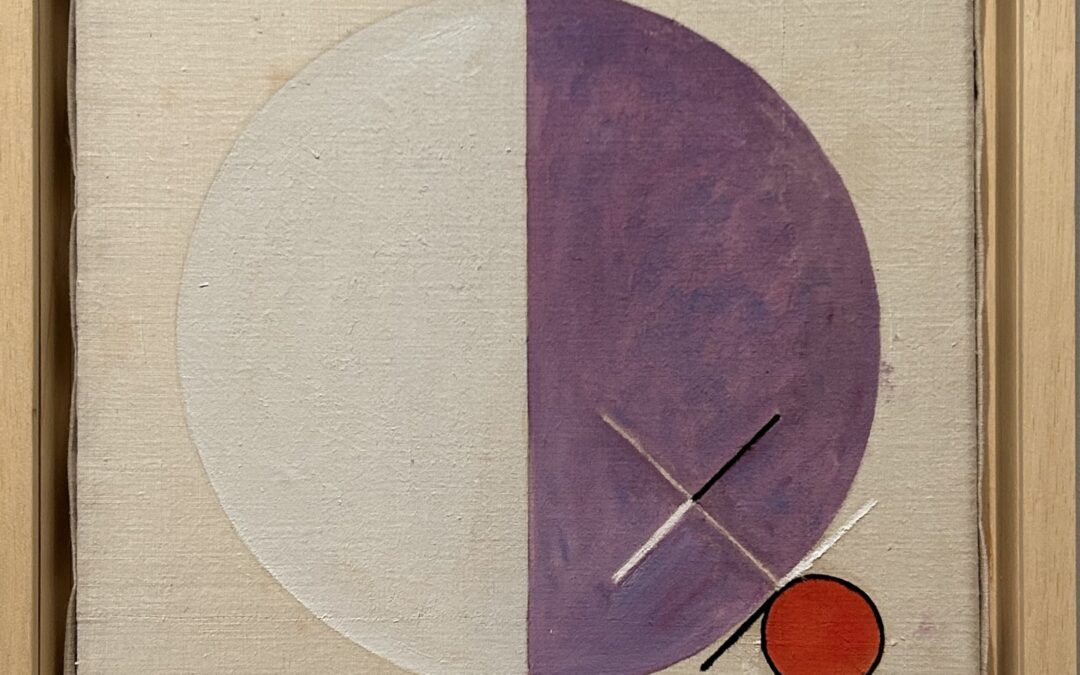
‘Moonlight and Lamplight’
by Winifred Nicholson 1893 – 1981
So, Abstract Art is a vast and open ended genre – there are really no rules or boundaries. However it is said that it stands for order, purity, simplicity and spirituality. We can see the order and simplicity in Piet Mondrian’s work.
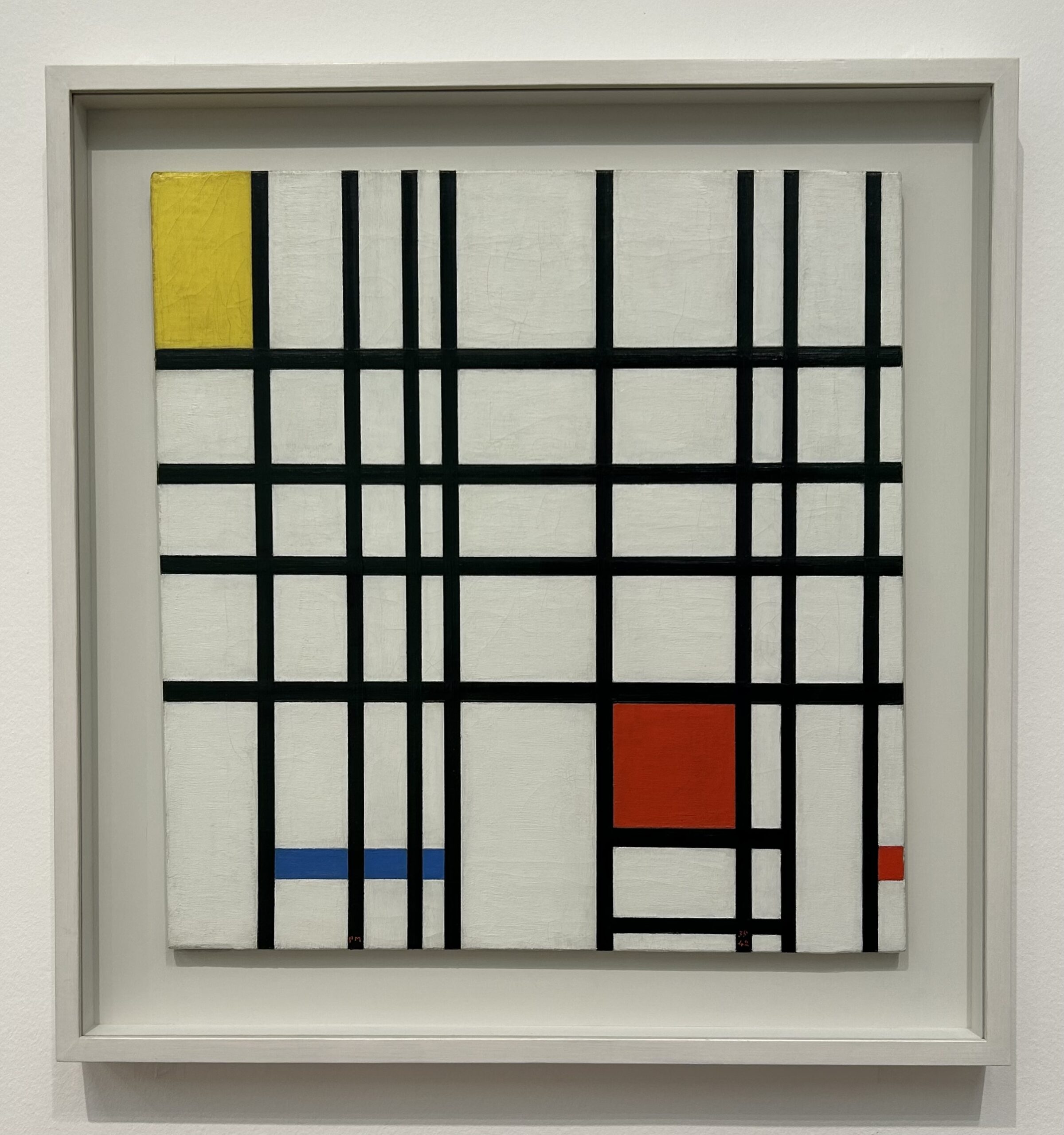
This is called ‘Composition with Yellow, Blue and Red’. Much of his abstract work is based on grids and primary colours which is based on his theory of neo-plasticism ‘a visual language of pure relationships’. Neo-plasticism is one of the 4 forms of Abstract Art – the others are ;
1. Expressionism – using big gestural markings and a strong colour palette, often to create bold and mystical landscapes. Chagall, Klee and Kandinsky were the pioneers of this movement.
2. Cubism and Fauvism – These movements showed the world in a very fragmented way – all rather revolutionary. Pablo Picasso is the best known cubist- using geometric and fragmented shapes in his famous portraits. Fauvists, like Henri Matisse, used non natural colours and over simplified forms.
3. Abstract Expressionism – an American movement post the 2nd World War. This was all about evoking emotion – and it didn’t matter if that emotion was negative or positive. Artists like Jackson Pollock were called ‘Action Painters’. They often used enormous canvases on the floor with huge quantities of paint splatter and very strong brushwork. The ‘Colour Field Painters’ were the ones who would cover a canvas in one block of colour – ‘to attain spiritual and divine qualities’!
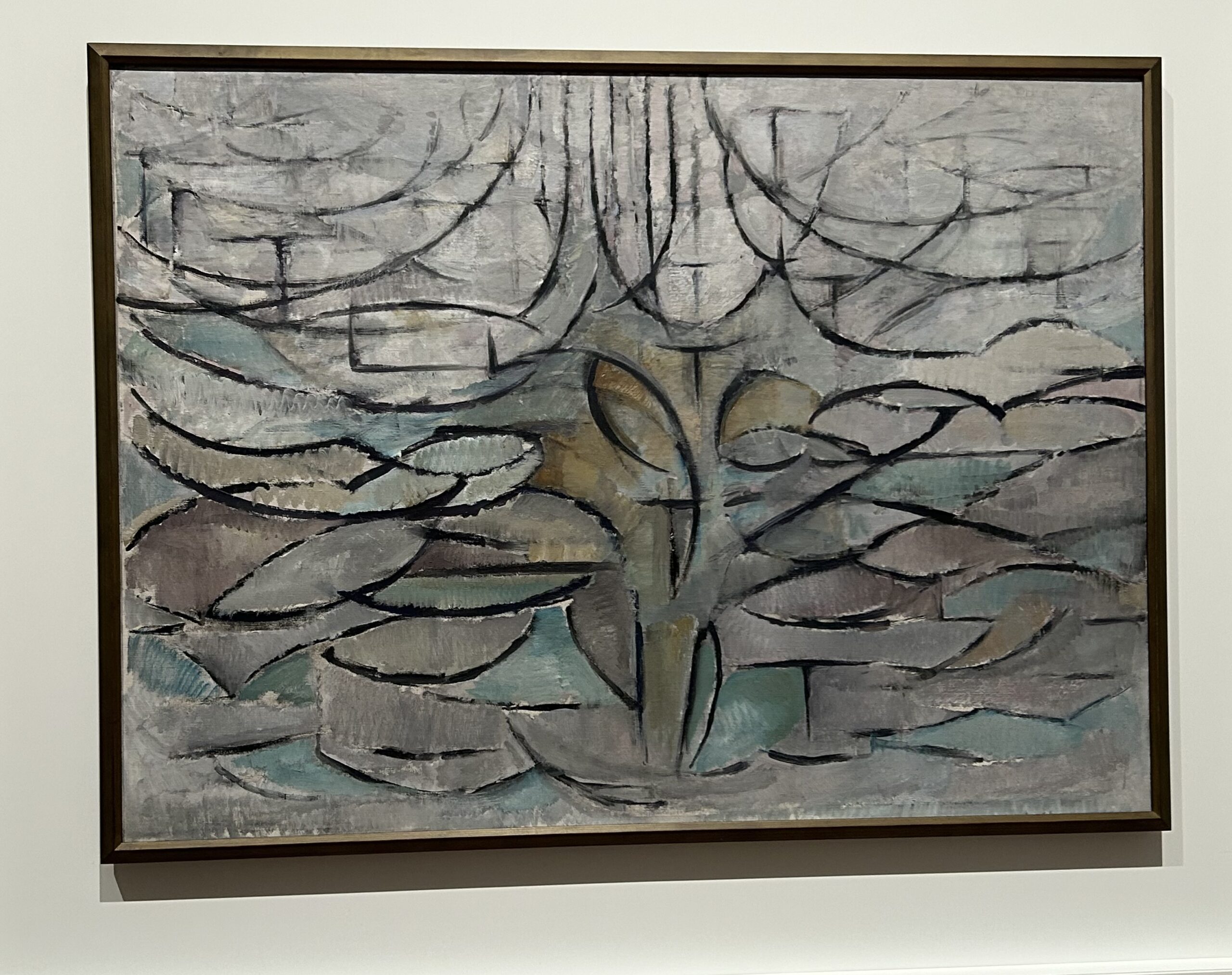
This is an earlier work by Mondrian – ‘Flowering Apple Tree’ (1912) – following a very traditional training we can see how he is veering away from realism towards Expressionism. His use of lines are obvious in this painting and this looks like a stepping stone to his Neo-plasticism pictures.
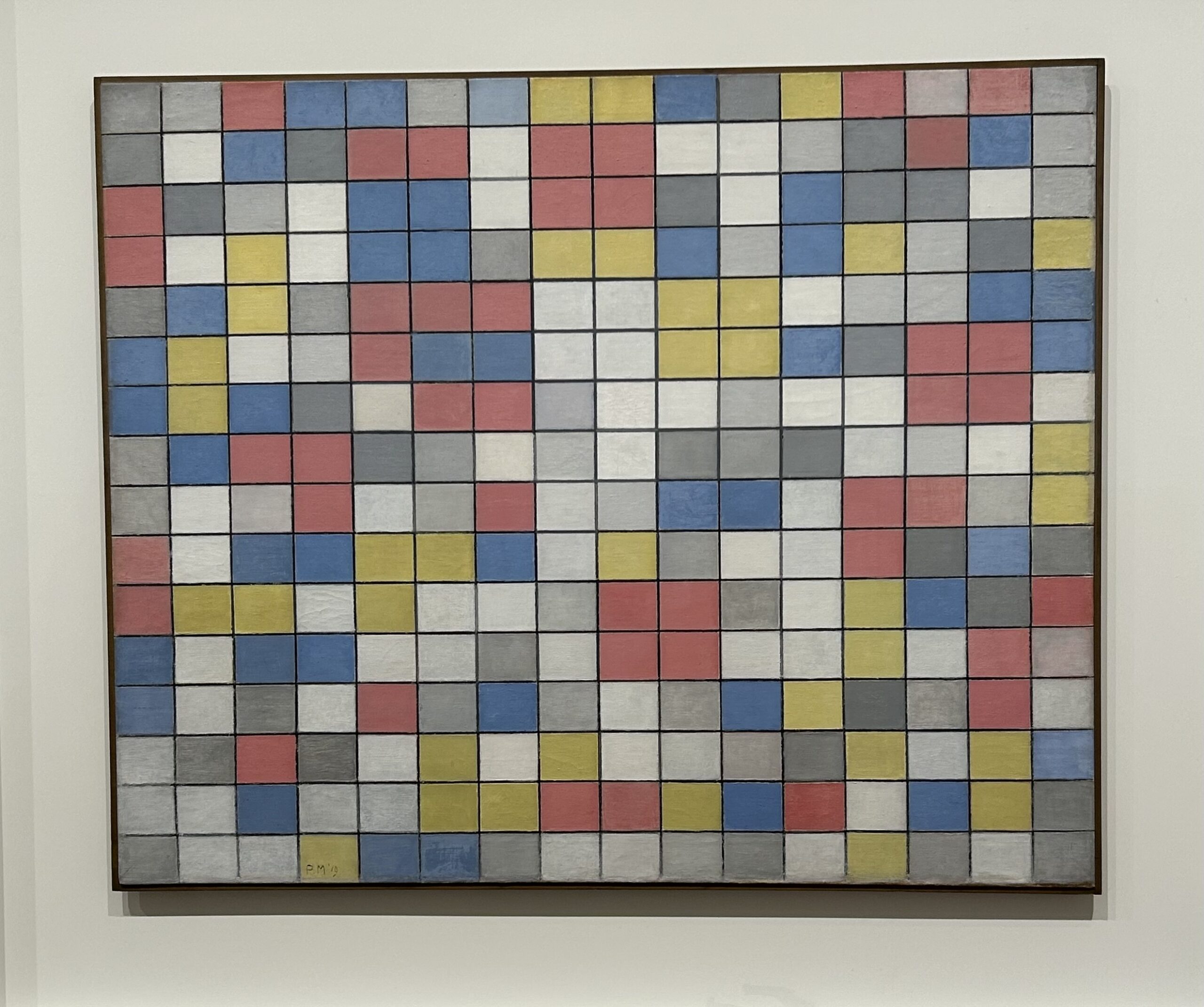
Another great pioneer of Abstract Art was the Swedish artist, Hilma Af Klint – a contemporary of Piet Mondrian. Hilma Af Klint is best known for her spiritual paintings. The series of large paintings called ‘The Paintings for the Temple’ she believed were commissioned by her spiritual guides. They depict the stages of life. All the paintings in this series are brightly coloured and patterned.
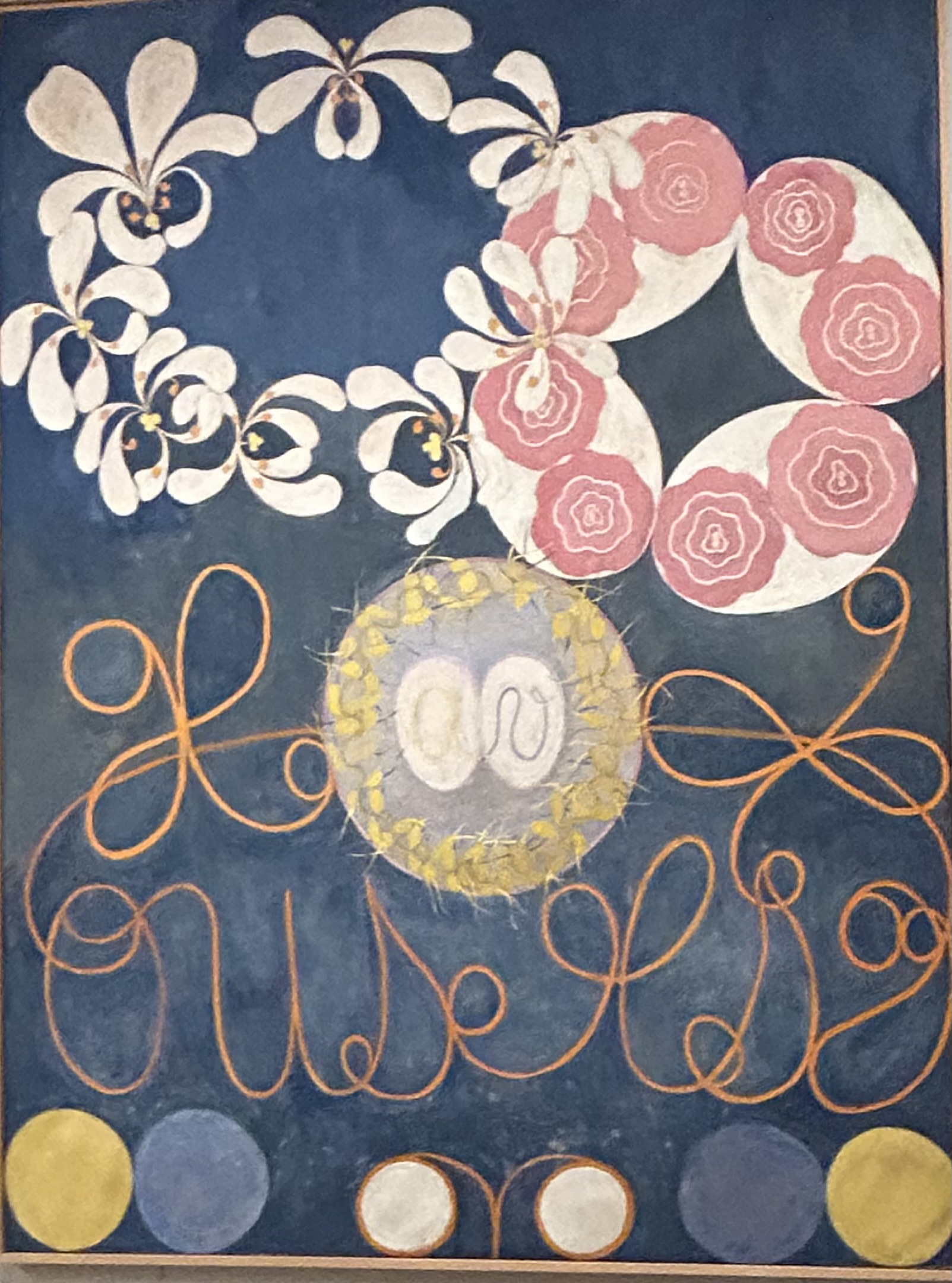
There are currently great temporary exhibitions showcasing abstract artists and of course The Tate, in all its galleries permanently focuses on modern and abstract art. I think a little at a time is the way forward!