JOIN JANE CONTINUING TO MAKE SENSE OF ART
And this month Jane is exploring the fundamentals of composition in art.
An artist has to start somewhere – and when I’m looking at a painting I often wonder what the starting point was. Was it a story or maybe an emotion that was the first spark of an idea? And then how does the artist start planning how to get that on to the canvas? This is where composition is so important – arranging all the elements to get the desired effect.
During the Renaissance period there were two very important developments in the art world which transformed the art of the future – the use of perspective and compositional techniques.
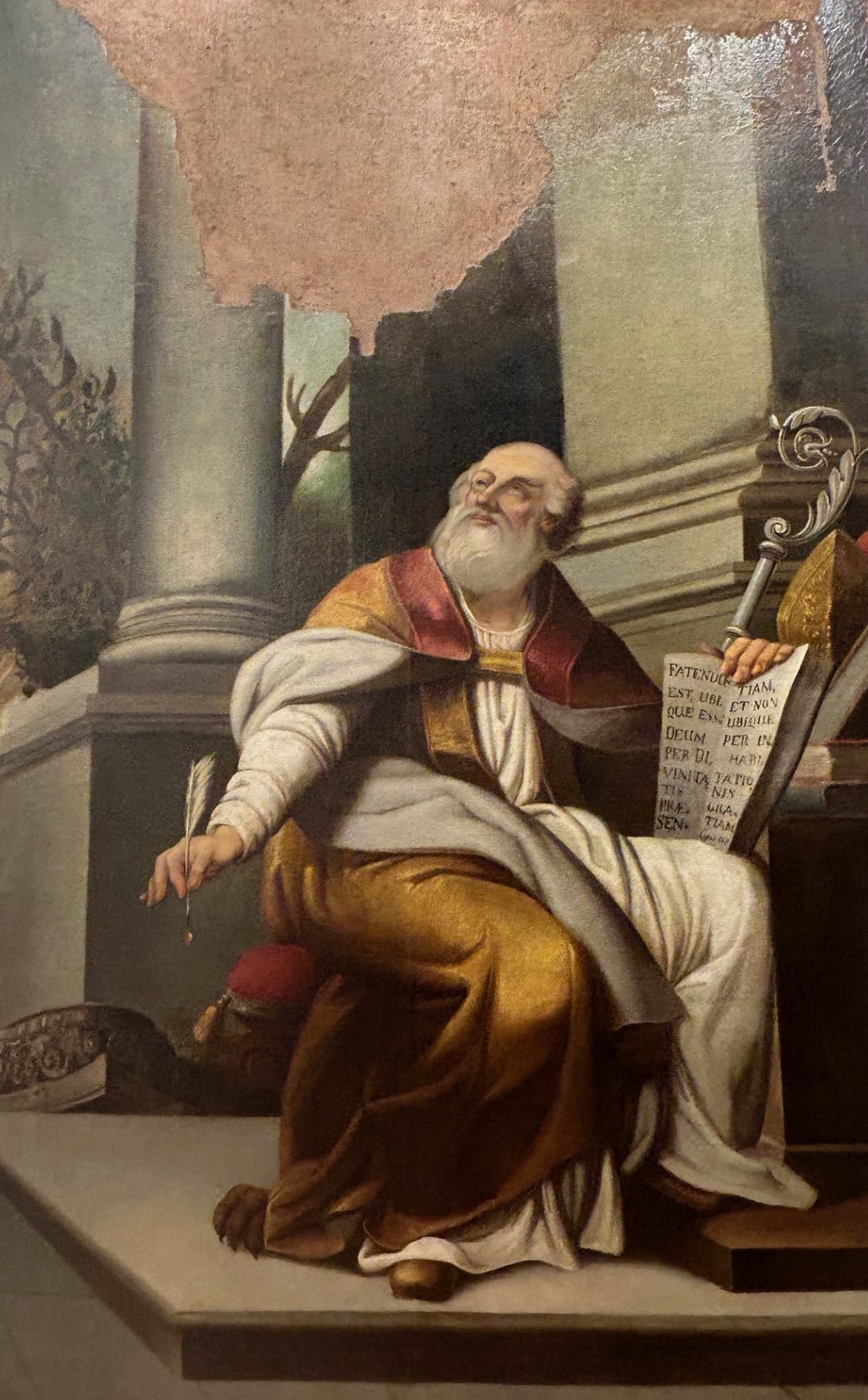
As you can see in the fresco above the artist has created a very realistic picture of this elderly man writing music. The columns and pillars give us a sense of the space he is in – and the artist could only do this by learning about perspective.
Renaissance artists were fascinated by the human mind and the world around them and they wanted to create harmonious, realistic art. So, they developed several different compositional ‘templates’. It’s fun to look at art from this period and work out which ‘template’ the artist was using.
Probably the easiest to spot is Triangle Composition.
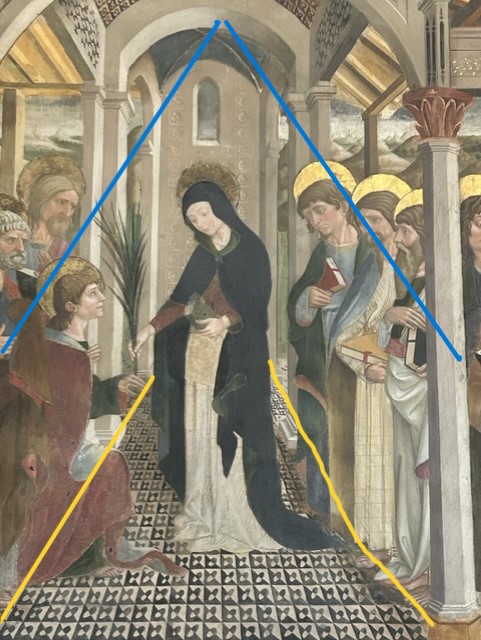
Look at this fresco below;
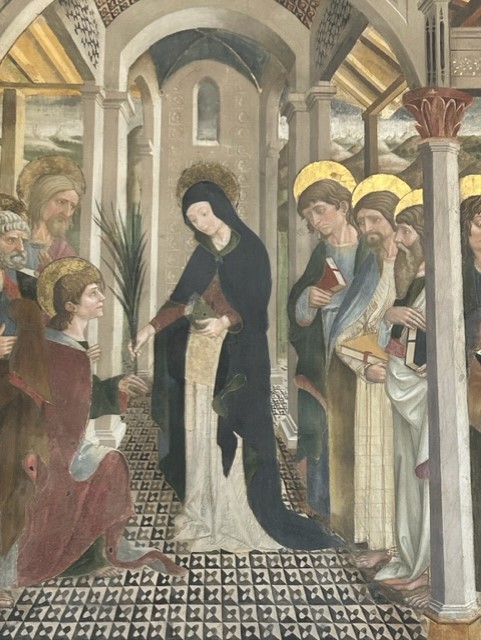
This is a good example of Triangle Composition. The linear lines of perspective recede to one point on the horizon – or in this case, to the top of the arch creating a triangle. If as in this case the point is at the top it symbolises heaven with the base grounding us on earth. It can be the other way round which represents a descent in to the physical world.
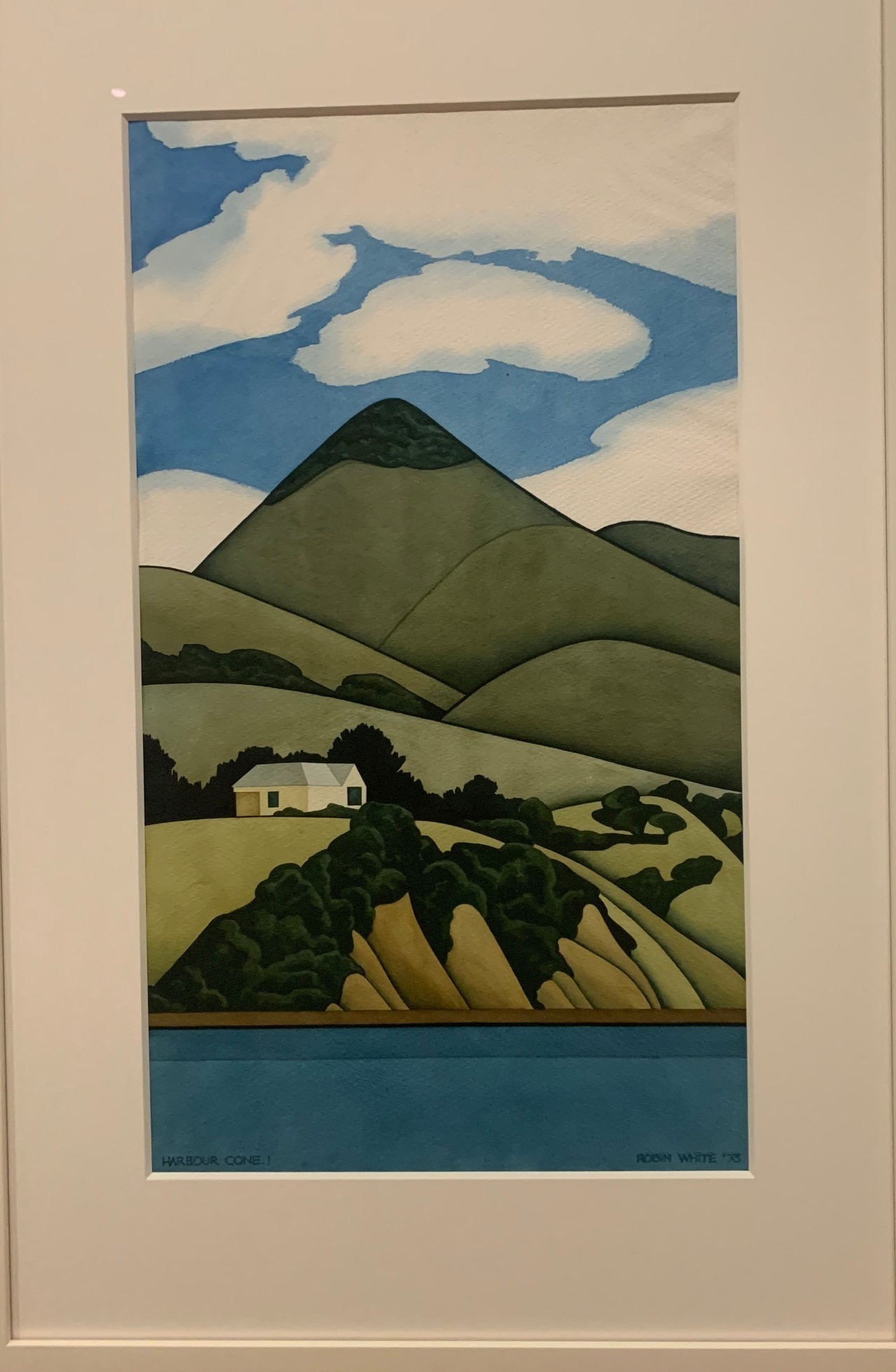
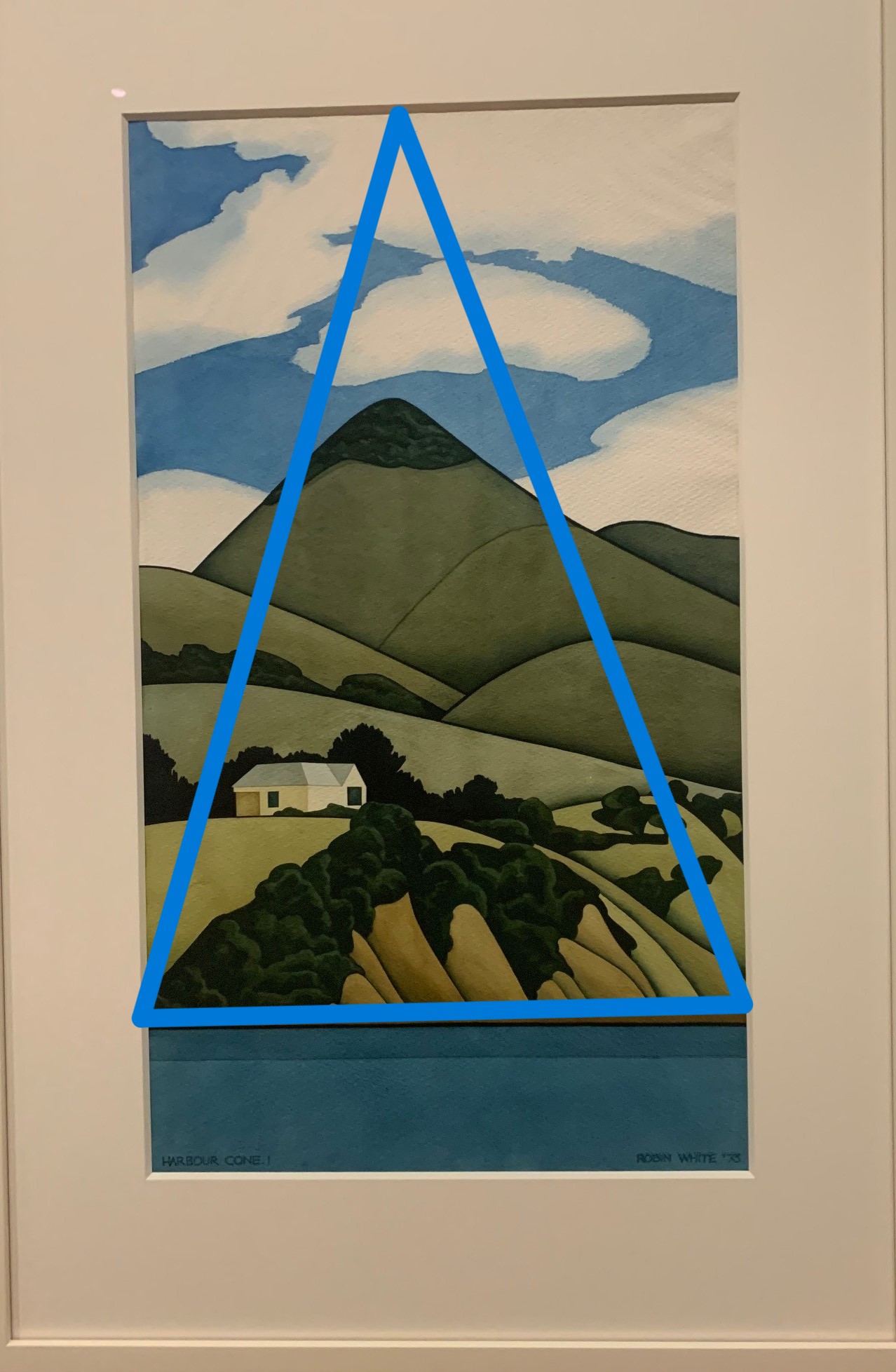
Here is a more modern painting using the same compositional technique.
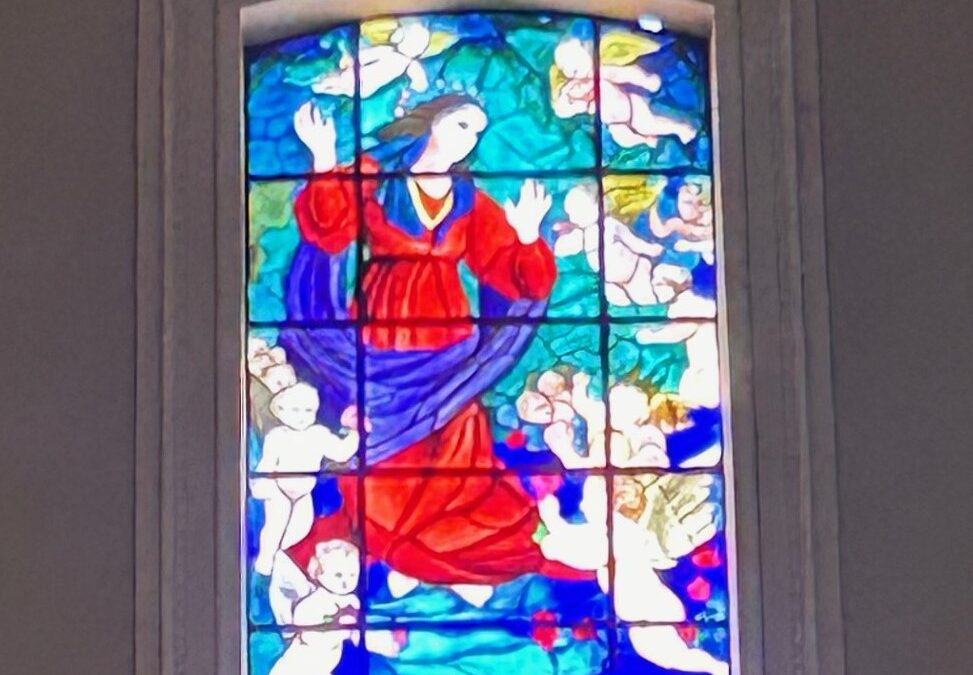
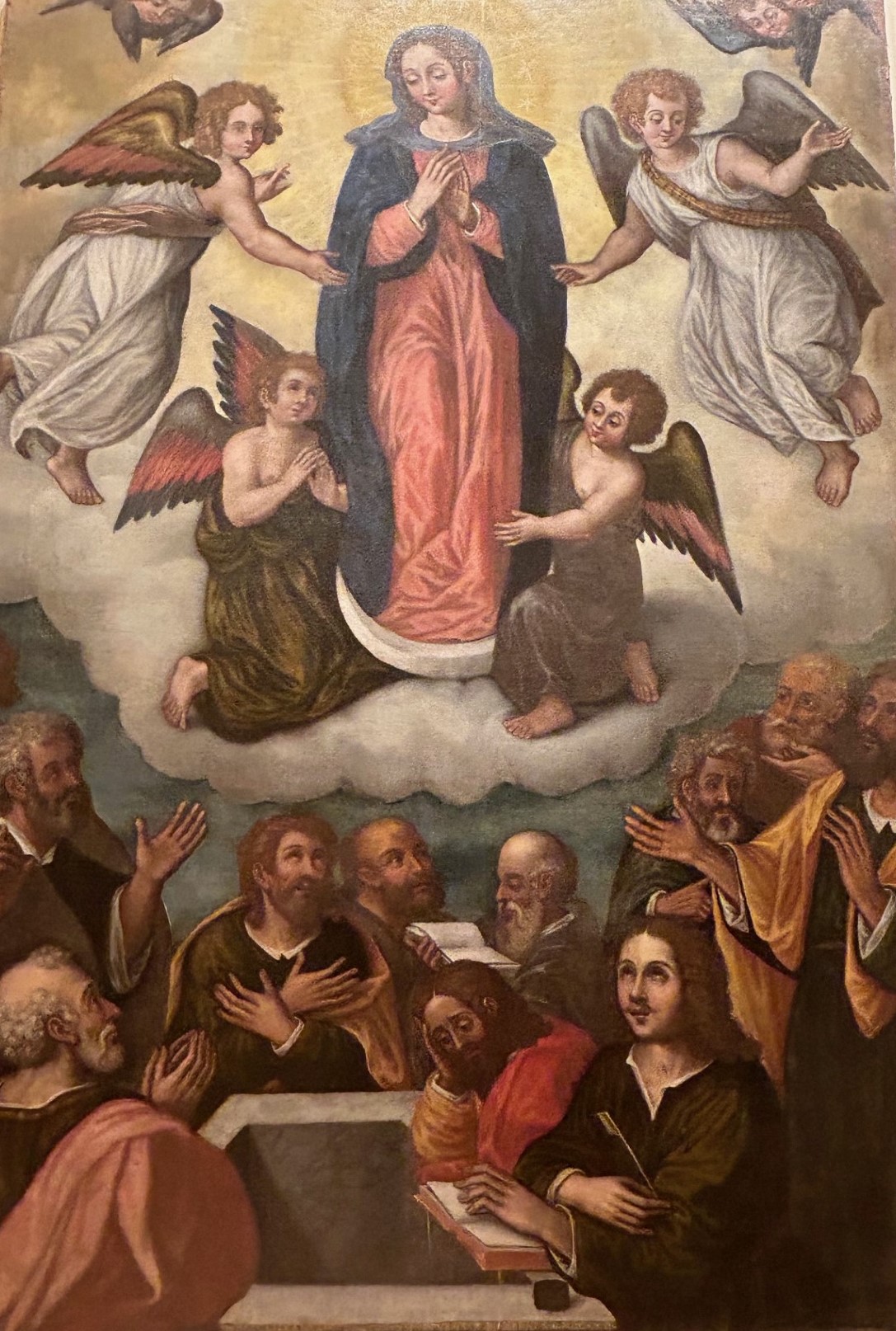
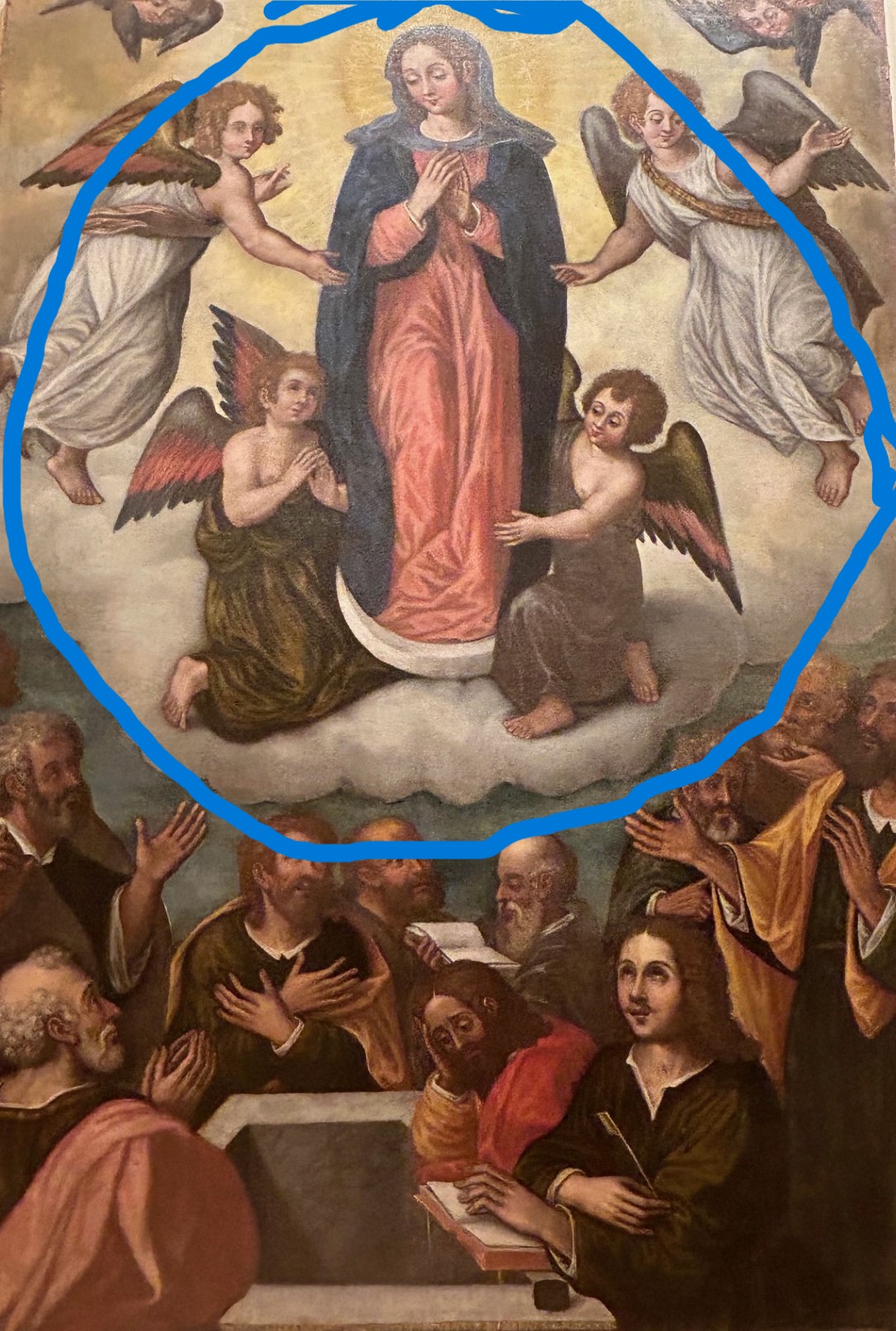
Circular composition usually centres on a group of important figures. A circle is a simple but balanced shape and it represented perfection. This idea can be seen below in a painting of Mary surrounded by angels. This is the important group that we are supposed to focus on – what is going on in Heaven is much more important than what is going on down on earth!
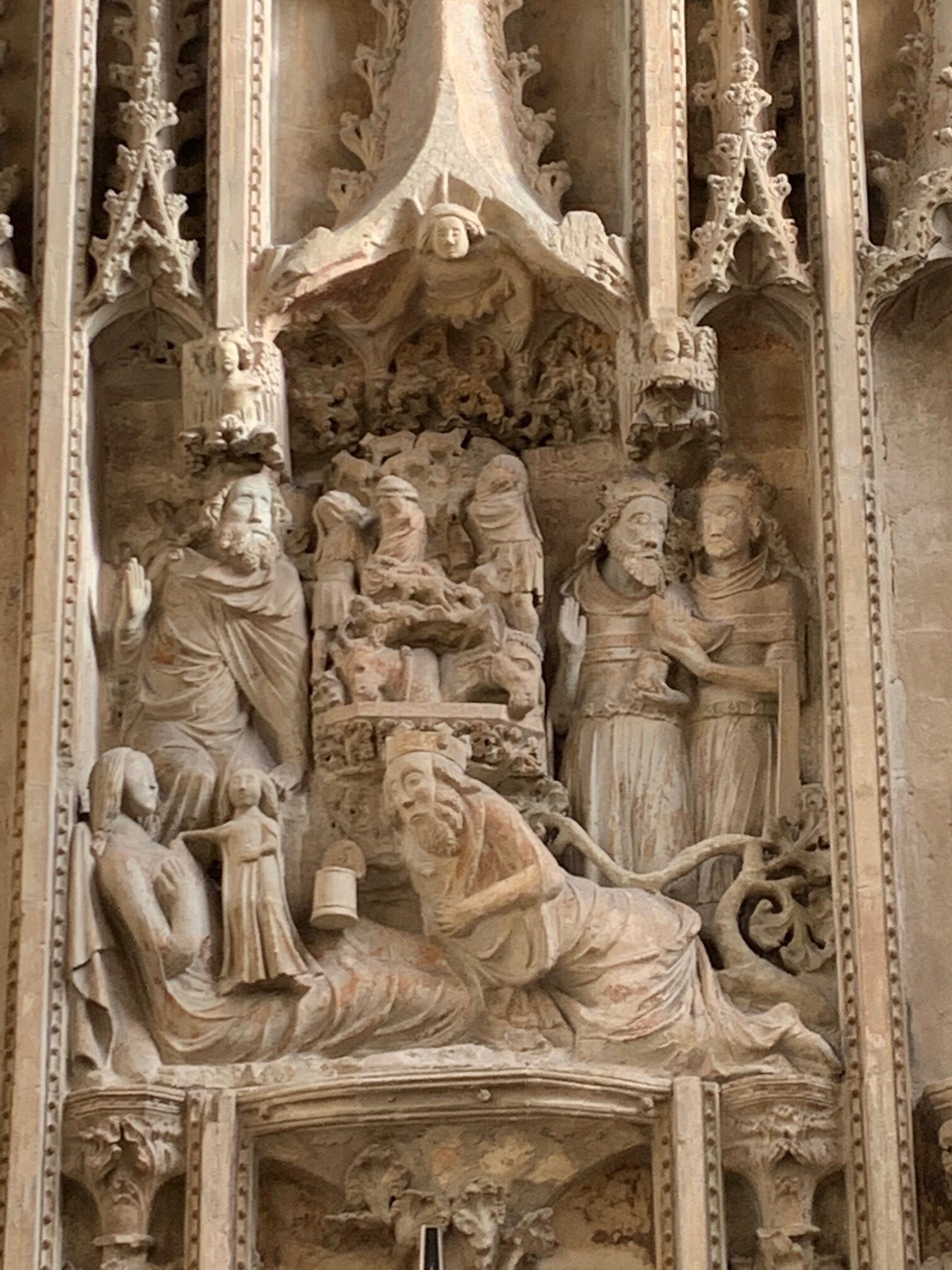
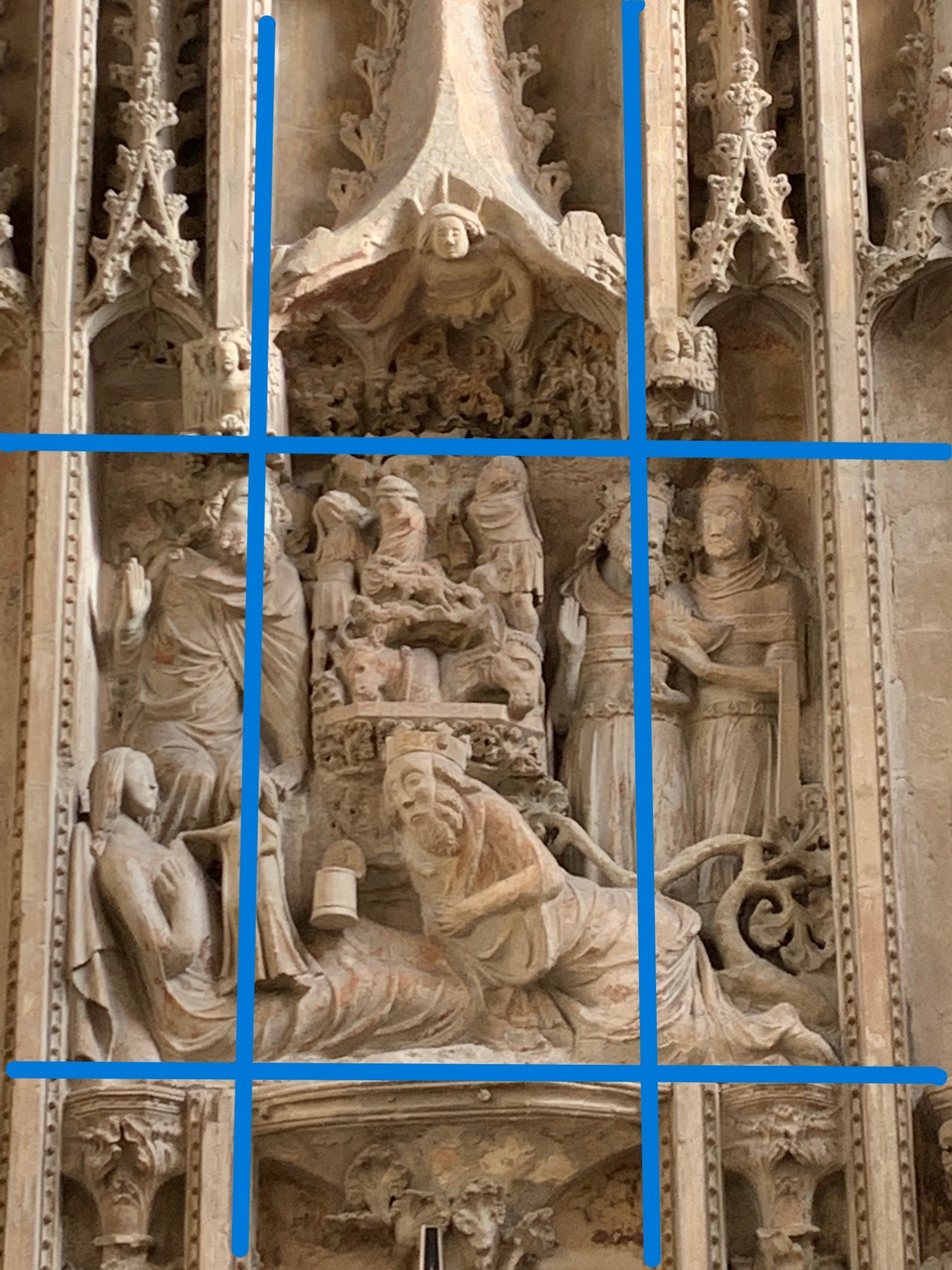
Then we have rectangular composition where the image can be broken down in to a grid that consists of 2 vertical and 2 horizontal lines, creating 9 roughly equal boxes. This sculptured altar piece is a good example of this.
So, the next time you are in a gallery have a look with your ‘composition’ eye and see if any of the pictures you see conform in any way to these Renaissance principles.