JOIN JANE CONTINUING TO MAKE SENSE OF ART
And this month Jane is exploring the traditional art forms in Kerala, Southern India.
Last month I shared with you the beautiful Keralan murals which I discovered on my recent trip to Southern India. The wonderful thing about travelling is that the sights, sounds and smells stay with you for ages and all my senses were flooded in India!
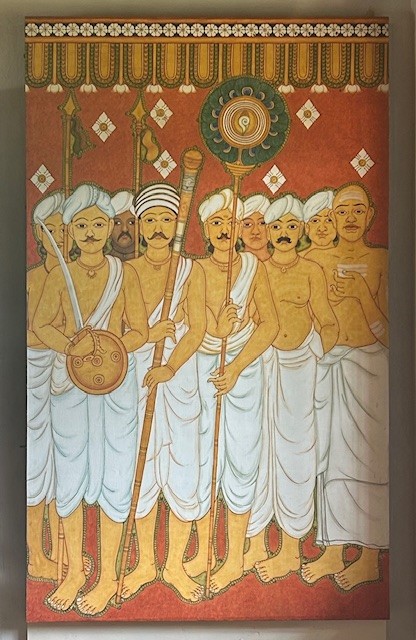
This month I would like to share with you some more examples of the art I saw in Kerala, all characterised by the use of colour, pattern and symbolism – usually telling a story or conveying a message.
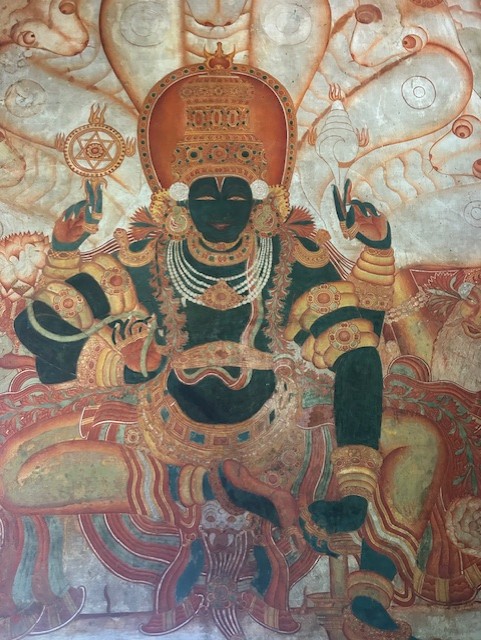
The painting above shows Lord Vishnu, (locally known as Thripunithura Appan). He is the supreme deity of the Royal Family. This painting shows him sitting on the serpent Ananta, and holding his 4 attributes – the Shankha (Conch), the Chakra (Disc), the Padma (Lotus) and The Gada (Mace). All these hold great symbolic meaning in the Hindu religion.
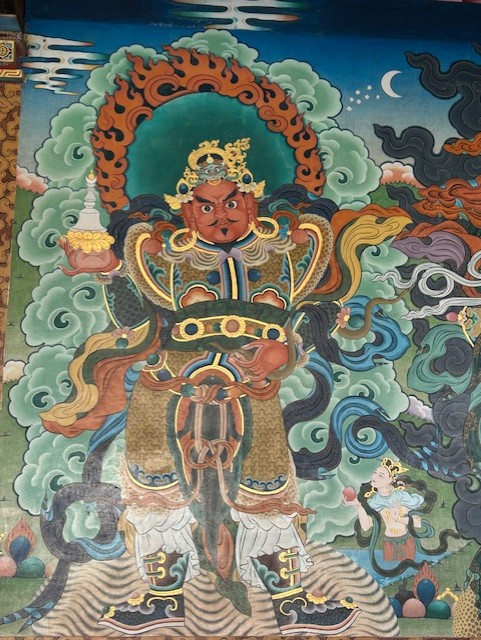
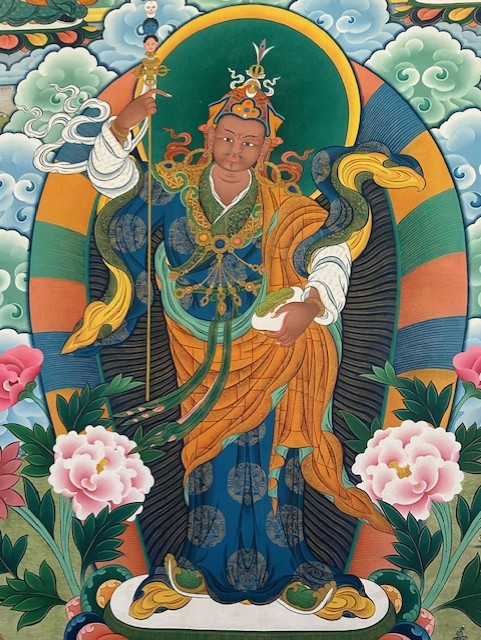
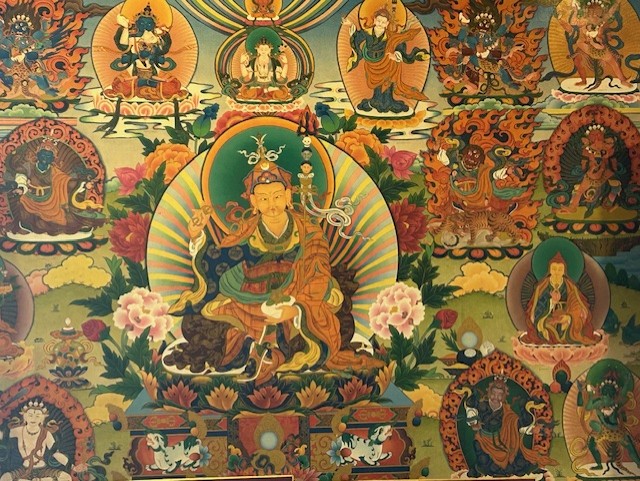
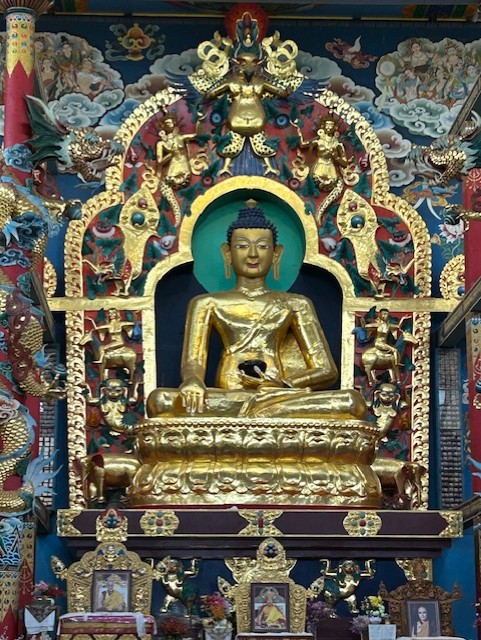
The 3 scenes above are from the Tibetan Monastery of Namdroling, often called The Golden Temple of Coorg. This monastery was established in the 1960s but the main temple wasn’t completed until 1999 so these paintings are contemporary tellings of the Buddhist teachings. As you can see, the colours are bright – and seemed even brighter in situ surrounded by extremely ornate gold and silver statues, many of Buddha (see below). The main temple has space for several thousand monks and its 4 walls are covered in these huge murals.
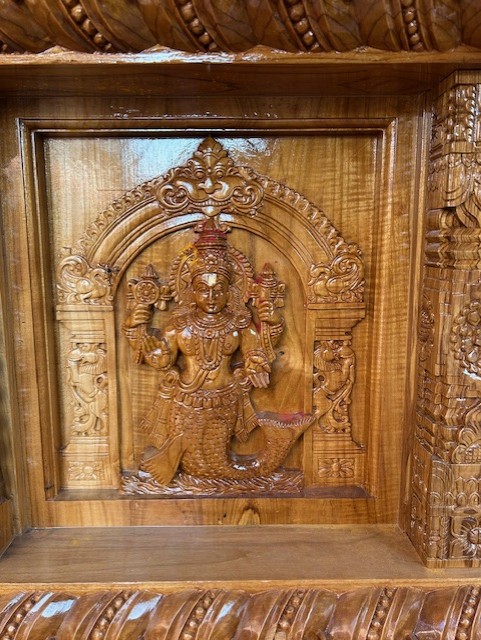
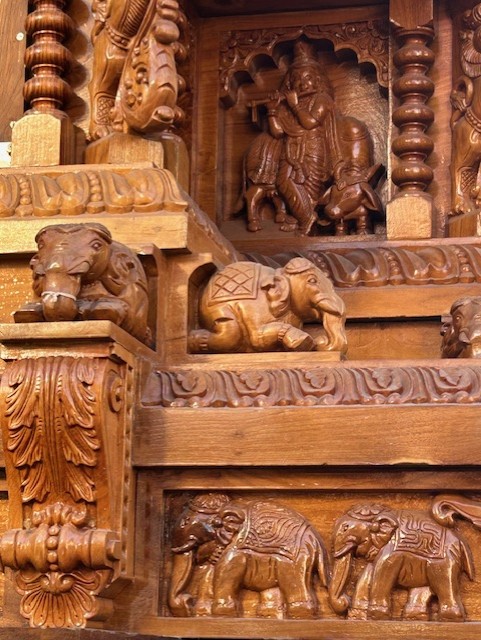
There was lots of wood carving in the older Hindu temples we visited. Again these tell stories of the deities, and elephants are featured a lot!
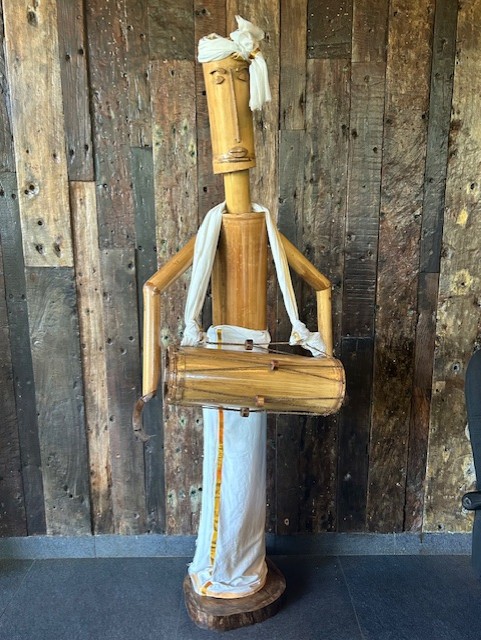
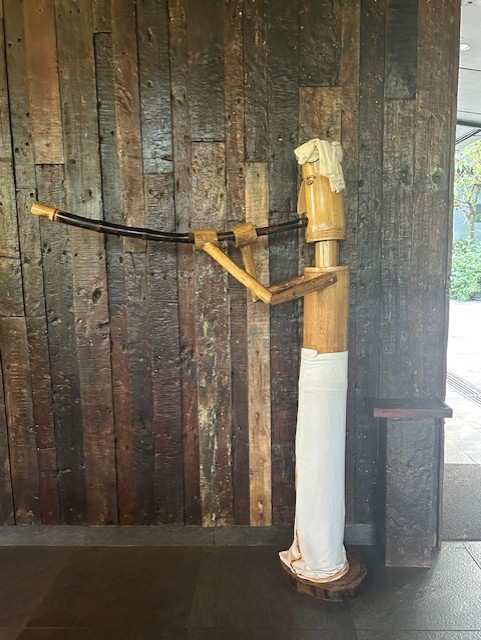
We were also treated to little art experiences in hotel foyers. The two below are in the reception area of a hotel in the Western Ghats Jungle – in fact there were six of them – all with a different instrument. Such fun!
I hope you’ve enjoyed this small taste of Indian art.