JOIN JANE CONTINUING TO MAKE SENSE OF ART
And this month Jane is exploring the work of Karl Martens and his fusion of Western and Eastern art.
Karl Martens was born in the USA to Swedish parents who were both fascinated by Western and Eastern art and culture. As a small child Karl sketched and painted birds – and this has become his life’s work, combined with the help of Zen Buddhism, meditation and Kyudo – Japanese archery.
He now lives permanently in Sweden and sadly has announced his retirement. His forthcoming exhibition at the Wykeham Gallery, Stockbridge will be his last exhibition of a body of work and so I thought it would be good to explore his background and style a bit to help explain his extraordinary work and style.

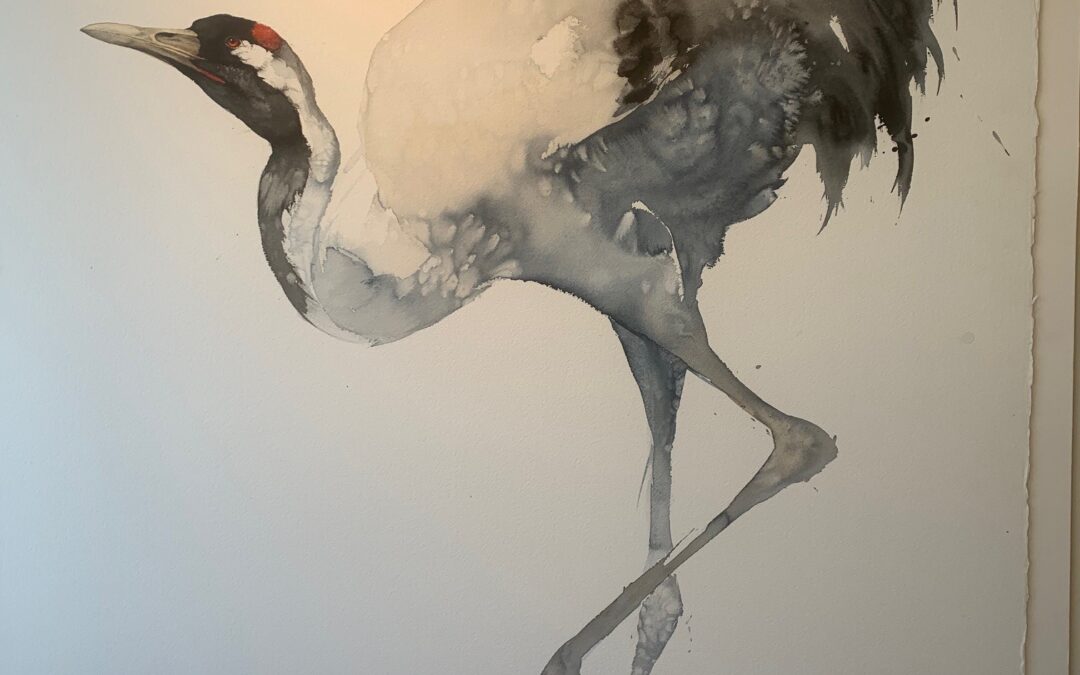
Karl’s work is heavily influenced by his study of Japanese calligraphy and in fact he uses huge calligraphy brushes to create his magnificent watercolours. But before he puts brush to paper he meditates – to empty his mind of everything except the bird that he is going to paint. He says;
“When we are in contact with our intuition, or emptiness, we are not affected by all the limiting conditions that our intellect can give rise to; doubts, fear, expectations and performance related anxiety. This way we are in contact with our highest potential. Through my painting I try to approach this state of mind by letting go of knowledge, which is associated with my intellect and instead act from emptiness.”
He then paints, from memory, on handmade paper (usually Indian or Japanese) which is lying on the floor.


“The handmade paper is impossible to control. Every sheet has its own temperament. Sometimes it absorbs like blotting paper. other times the complete opposite.”
He has already mixed his paint in large jars and has a big bowl of water and coarse salt to hand. Then using the large calligraphy brush he starts – standing over the paper he makes the first stroke determining the shape of the bird or small animal. The bodies are always painted very loosely and the legs and feet are rarely complete – or there at all. He uses coarse salt and water to great effect. The result is a very wet body which needs a couple of days to dry. Once dry the painting is hung on an easel for the detailed head to be painted – finished with a piercing eye.
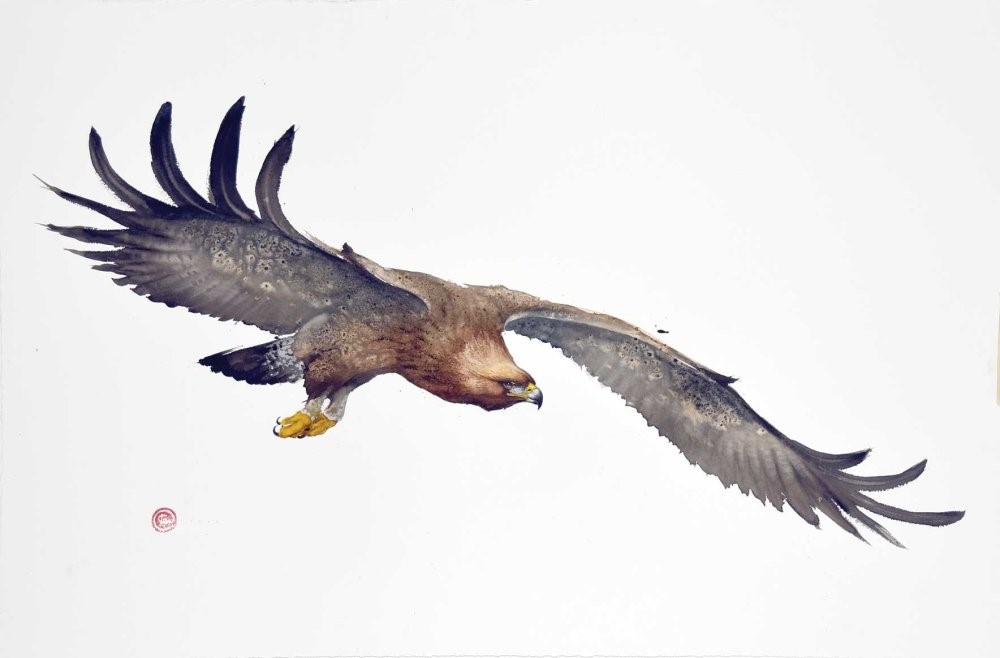
His paintings of birds and animals never have any background – nothing to distract from the beauty and power of the bird/animal. The positioning on the paper is extremely important and I find it incredible that Karl can position it right without marking the paper first. He says;
“There must be balance and harmony between the proportions of the watercolour and the format of the paper.”
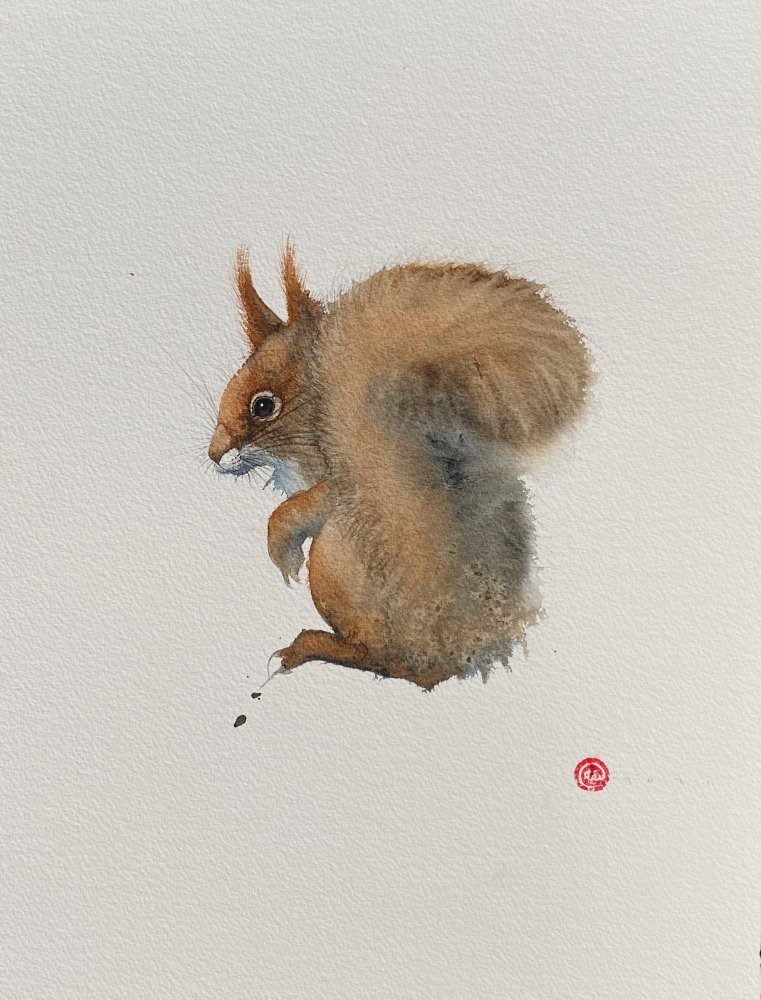
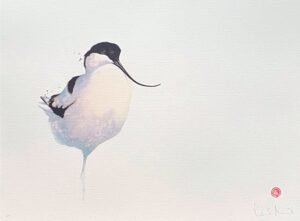
The bright red monogram placed very carefully on every piece of work is also a nod to Japanese and Chinese art – this red mark contains Karl’s initials. Some work is signed as well but interestingly not all of it.
Whilst the original watercolours are extremely special particularly with the harmony between the paint and the paper being so obvious, the lithographs are a more affordable way of owning a piece of Karl Martens. They are all a limited edition and there is a great range of birds and small animals to choose from. These would be fabulous in a child’s bedroom.
