JOIN JANE CONTINUING TO MAKE SENSE OF ART
And this month Jane is exploring Pointillism
‘Pointillism’ was a word first used by the art critic Felix Feneon in 1886, to describe the work being created by Georges Seurat and his student Paul Signac. These two great artists were looking for something different to the Impressionist painters and in fact their techniques became known as the Neo Impressionism movement and it inspired many artists of the future.
The painting below is an example of Seurat’s work – The Channel of Gravelines, Grand Fort-Philippe.
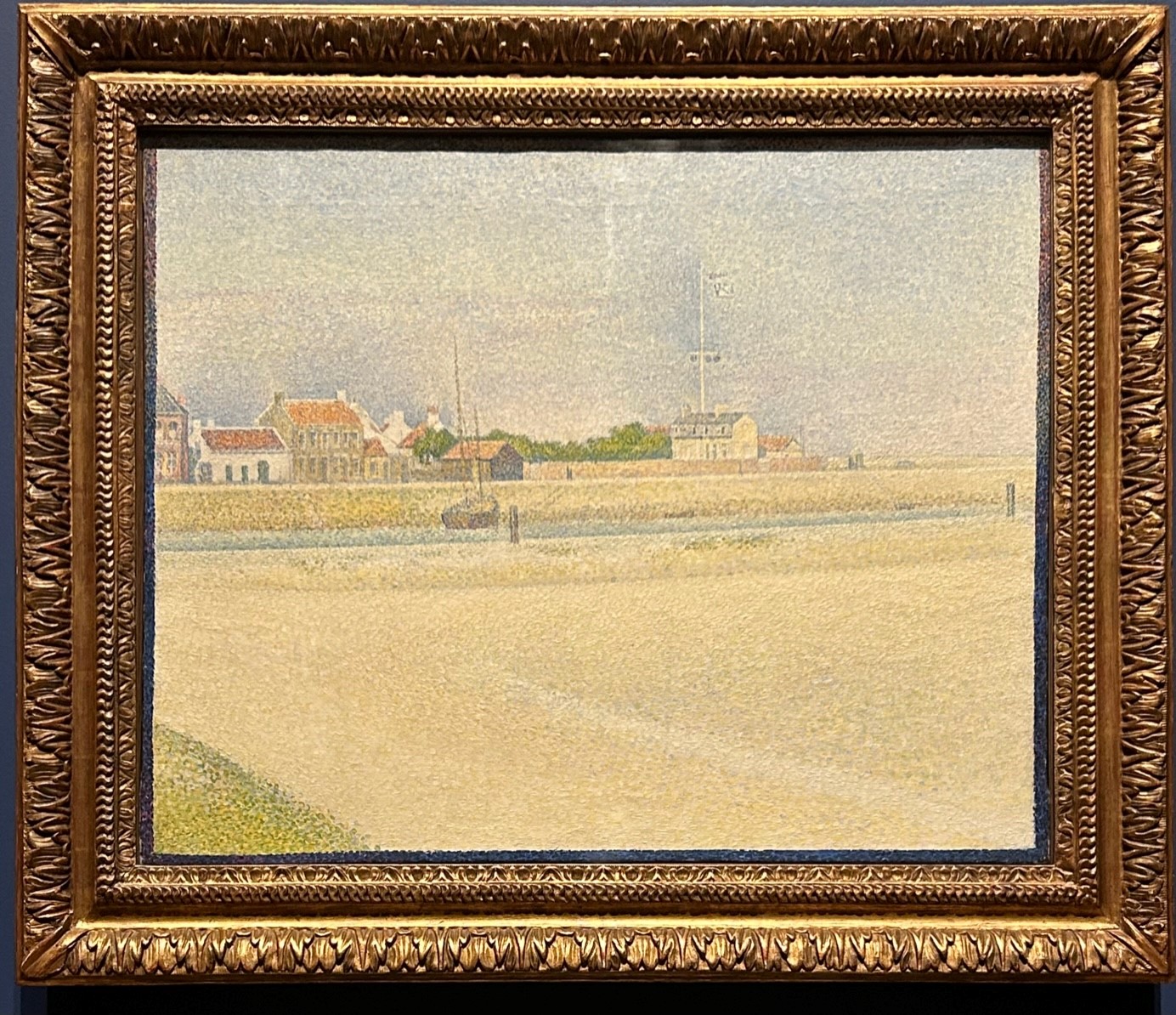
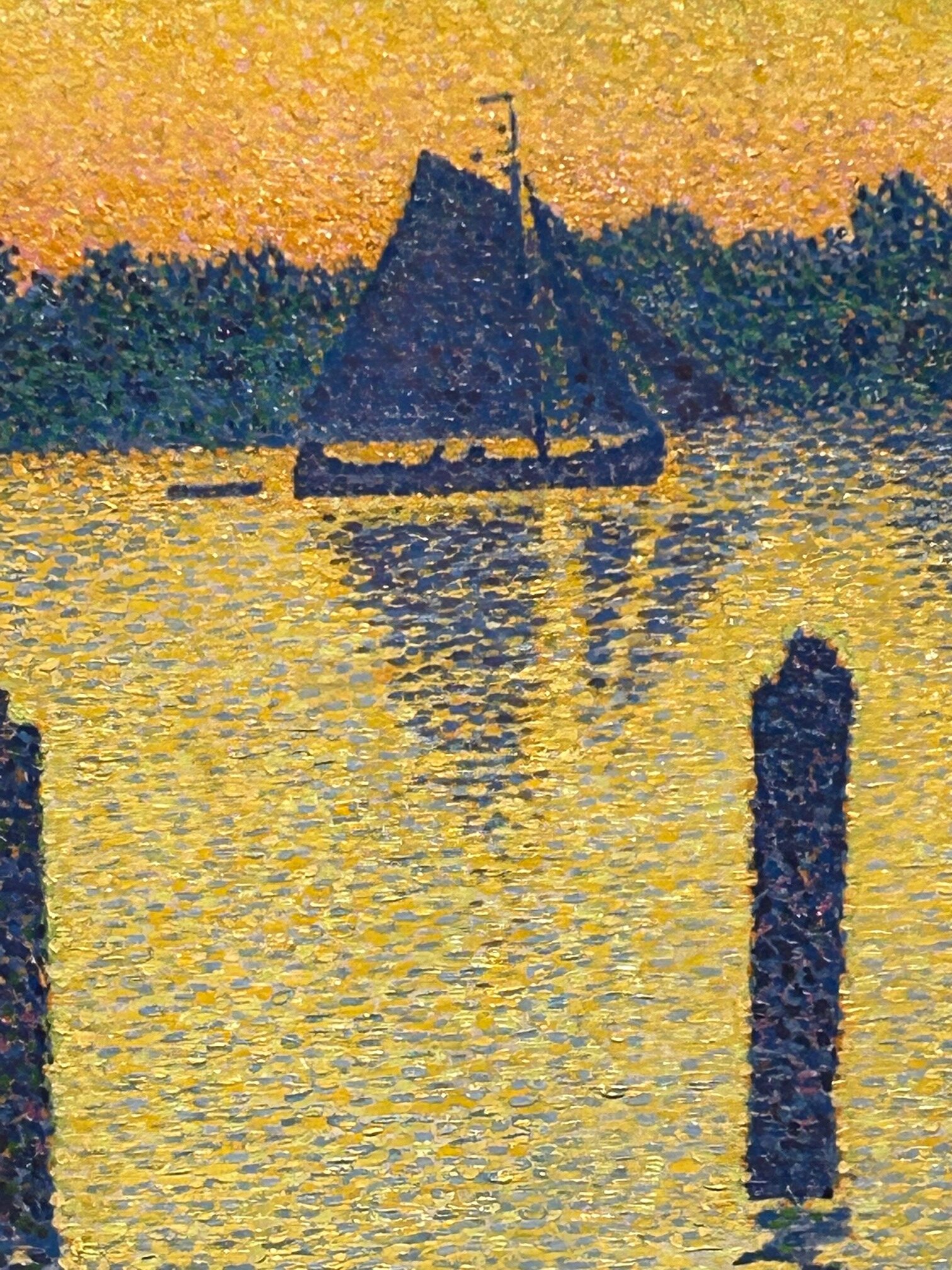
At a distance this looks like a traditional landscape with a fairly pale palette. However if we look at a close up we can see exactly why the technique he uses is called ‘Pointillism’.
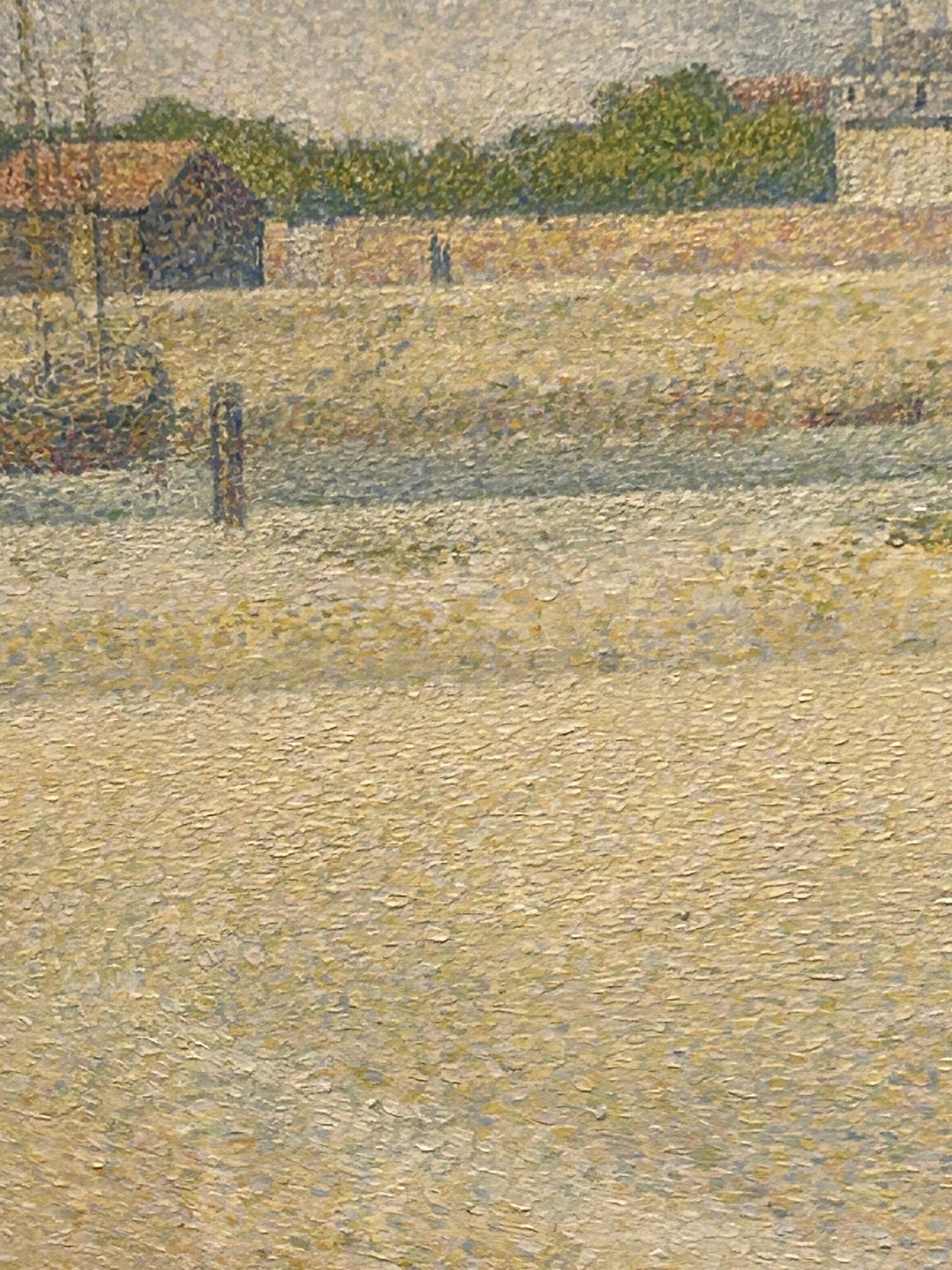
So, the whole painting is made up of dots of colour. These colours are pure colours – not mixed. The idea is that from a distance the colours blend to give a wide range of colours. The unmixed colours placed next to each other appear to change in shade and tone – we, the viewer are mixing the colours optically. Pointillism is really an optical illusion!
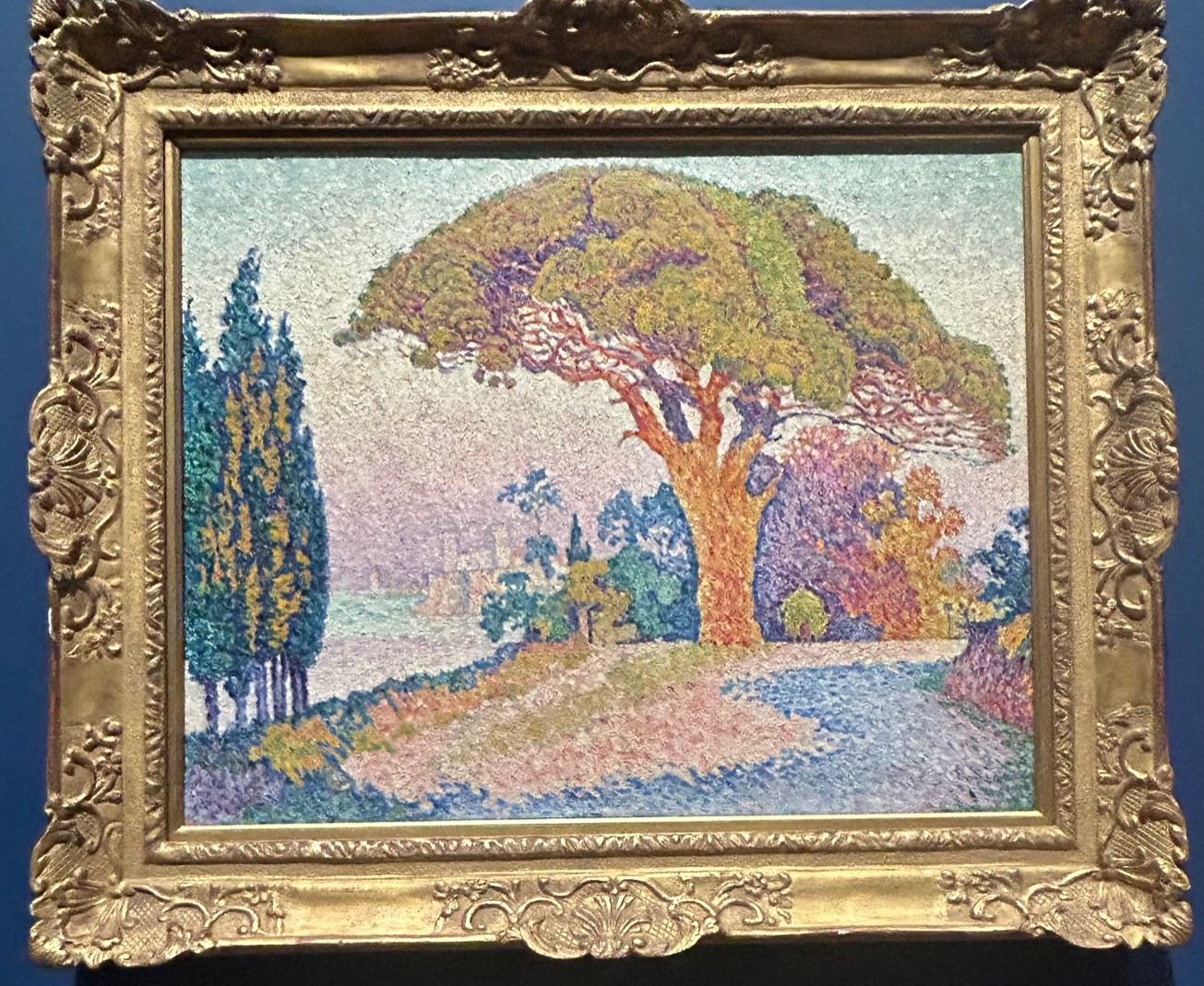
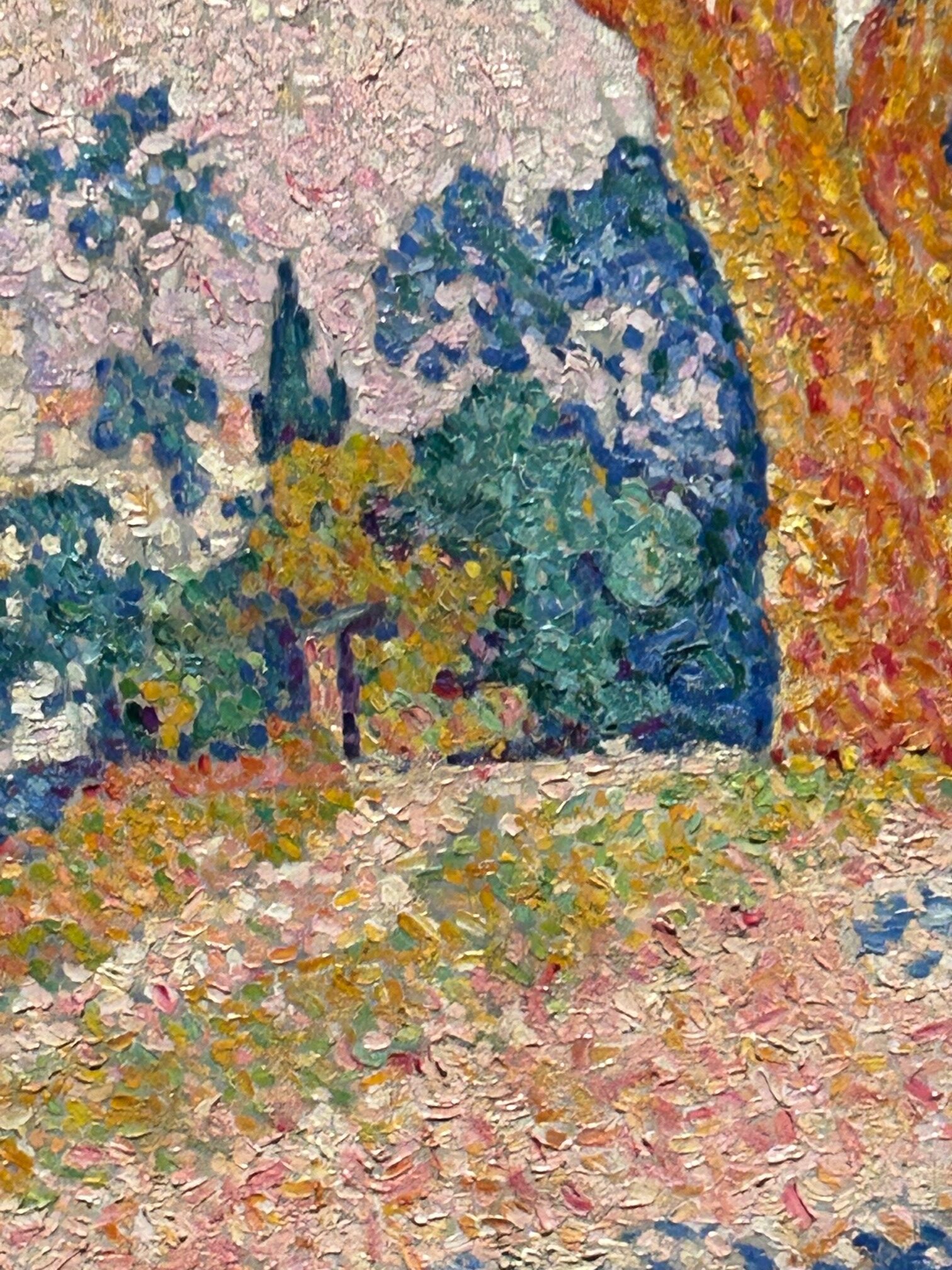
Sadly Georges Seurat died in 1891 at the age of 31 and his student Paul Signac took over the leadership of Neo Impressionism. The painting above is ‘Bertaud’s Pine’. You can see in the detail that actually the paint strokes are bigger than the dots in Seurat’s painting – they are more like dabs of paint – like a mosaic of colour.
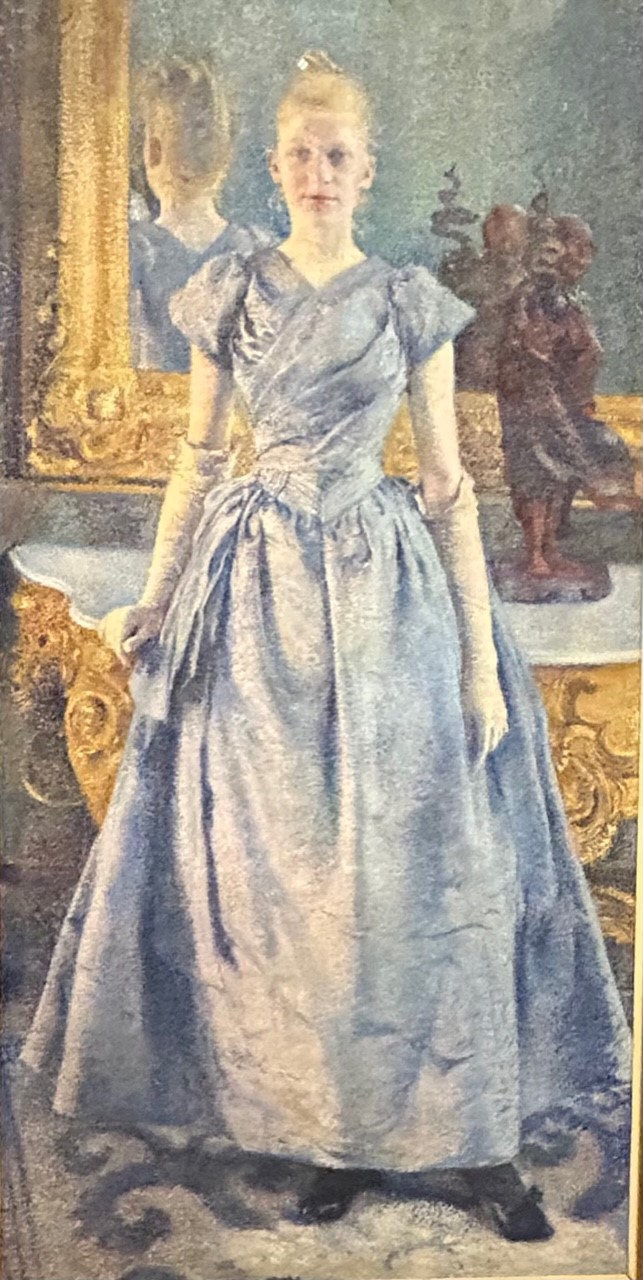
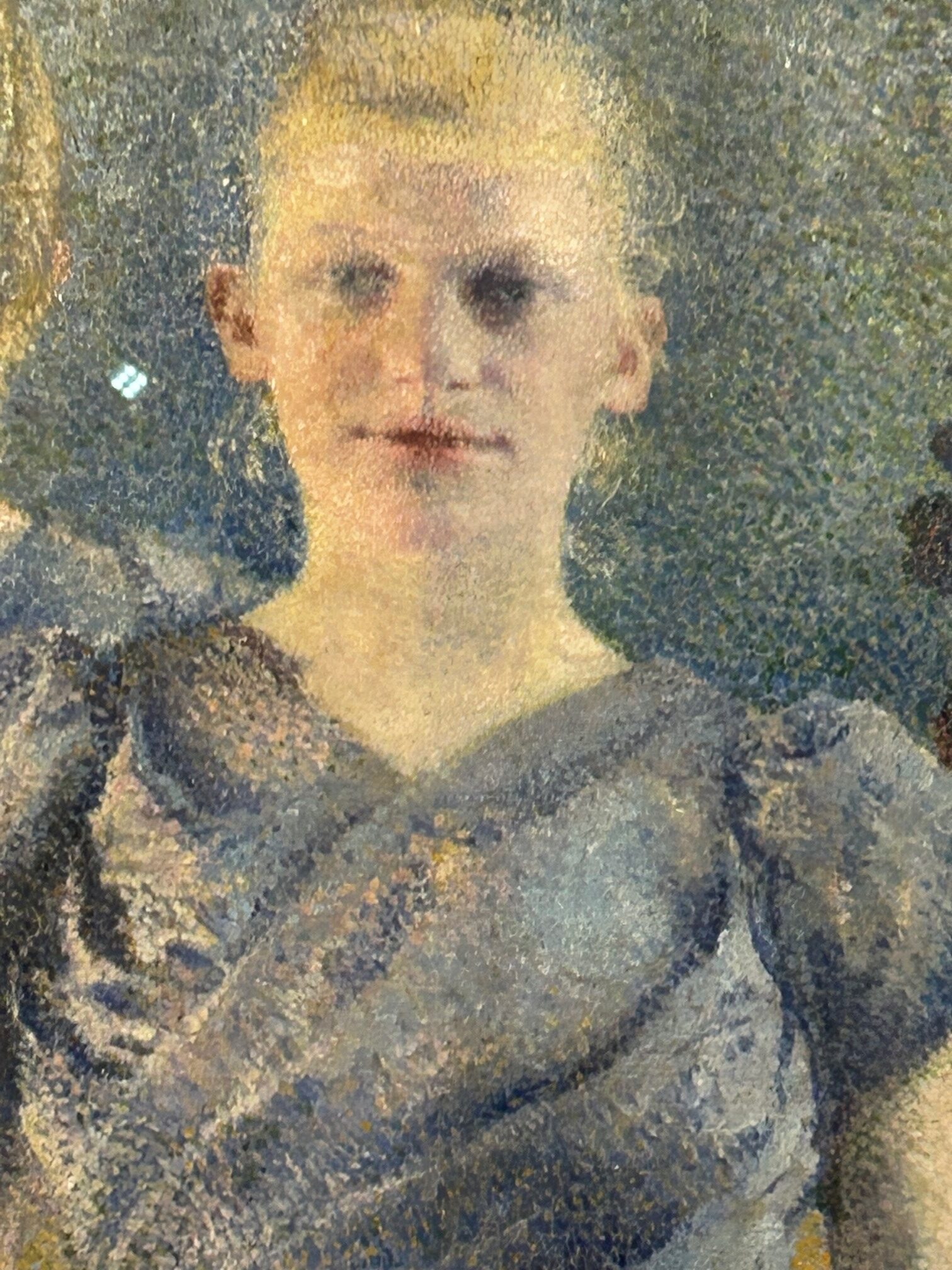
This technique was even used in portrait painting. The painting above is ‘Alice Sethe’ by Theo van Rysselberghe, painted in 1888. Rysselberghe took the new techniques beyond France to Brussels. He manages to create extraordinary light and texture across her gown – the shadows in the folds of the fabric are amazing – all done with the perfect placing of dots of paint!
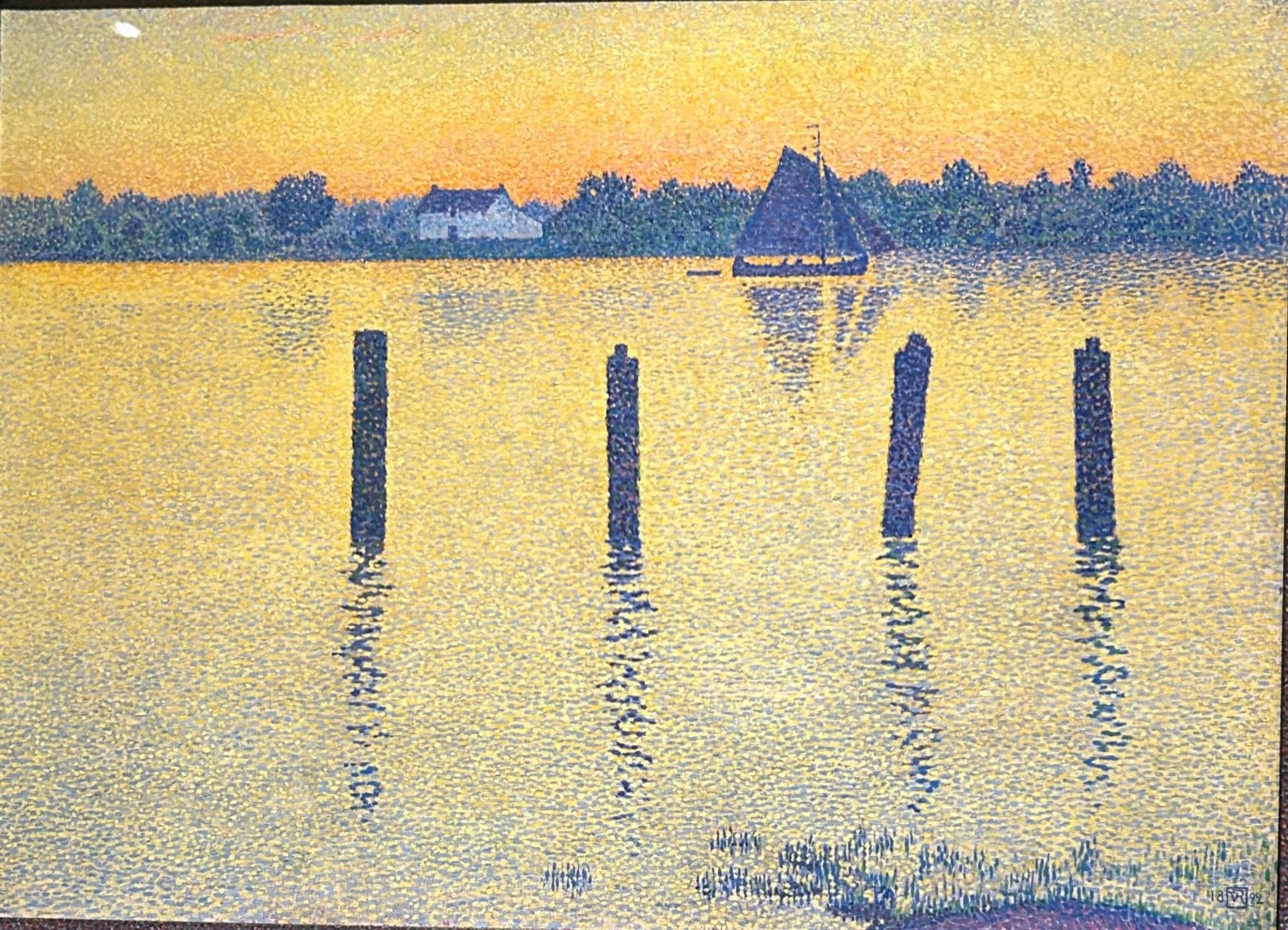
This is one of my favourites – again by van Rysselberghe, called ‘The Scheldt Upstream from Antwerp, Evening’, painted in 1892. It has the same linear style of of Seurat’s ‘The Channel of Gravelines’, a simplified scene dominated by 2 colours.
Pointillism can also be called ‘Divisionism’ or ‘Chromoluminarism’, both referring to the optical effects of the use of pure colour in this way. The artists tended to use oil paint because the colours are very vibrant and strong and because the consistency of the paint holds its shape on the canvas – so a dot stays a dot!
Many great artists were influenced by the Neo Impressionism movement and it’s pointillism including Van Gogh, Paul Cezanne, Paul Gaugin and Henri Toulouse-Lautrec.