

JOIN JANE CONTINUING TO MAKE SENSE OF ART
And this month Jane is learning about the Spanish artist Joan Miro.
I have just returned from a few days in Palma, Mallorca. I was visiting my daughter who had recently arrived there after 2 weeks at sea dodging hurricanes across the Atlantic! Anyway, it was an opportunity to visit the Fundacio Miro, Mallorca – set up by the artist Joan Miro and his wife Pilar, before they died. This complex comprises a modern gallery building, a purpose built studio and another studio complex in the ground floor of a beautiful old villa, overlooking the sea.
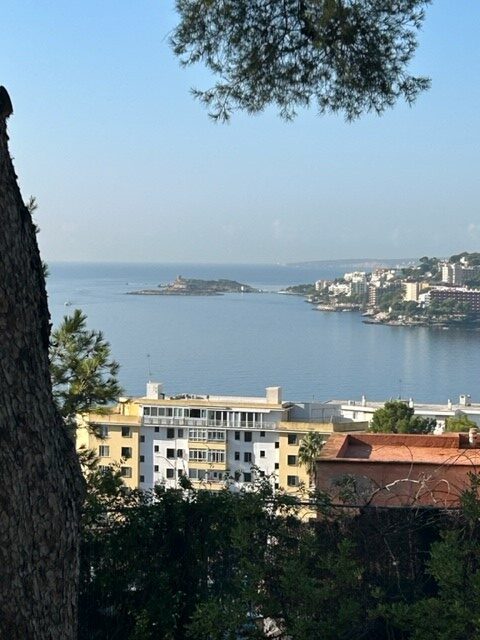
Joan Miro was born in Barcelona in 1893 and became one of the most influential painters of his time – a great mover and shaker in the Dada movement post the 1st World War and then the following period of Surrealism. He moved to Palma in the 1950s where he lived and worked until he died in 1983.

The studio complex is extraordinary – any artist’s dream. The 1st , known as the Sert Studio was designed for him by his great friend Josef Lluis Sert – a huge room with easels, work benches and vast walls to display massive canvasses.

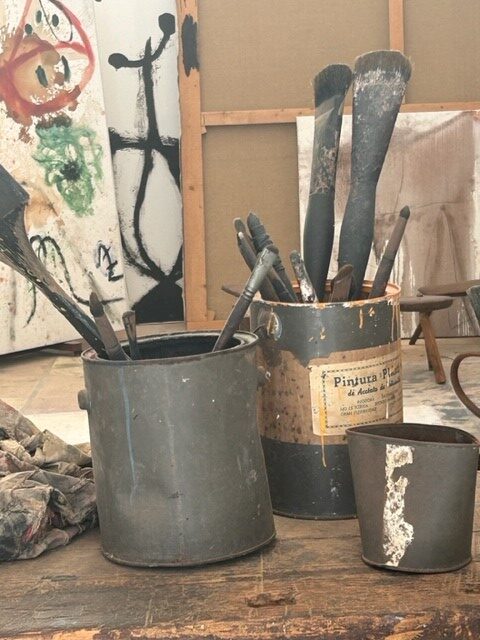
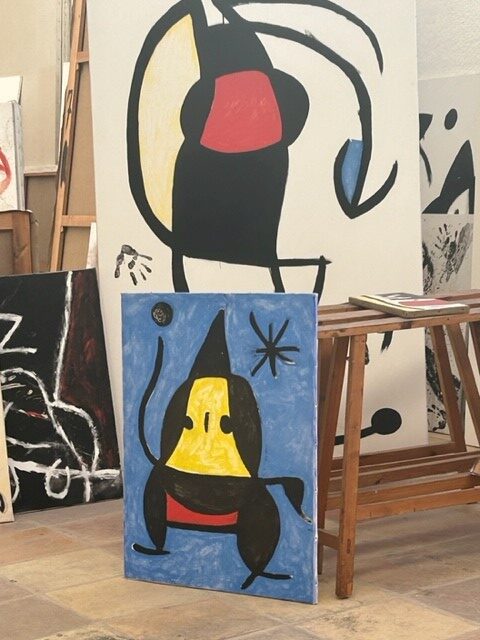
Son Bot is the villa next to the Sert Studio which he purchased in the 1960s. This became his refuge where he worked on sculptures and larger paintings – the rooms are more like caves – much smaller and darker than his purpose built studio. There is charcoal graffiti all over the walls – sketches for his sculptures – it all feels totally unstructured – a rather wild way of working. There are collections of bizarre objects lying about. In November 1975 Miro said “The ‘truth’ is here in Son Boter”. It became his refuge.


So what about the art produced in these amazing spaces? Well……………… I have to say I found it rather hard going and difficult to get my head around! It all felt very harsh. Miro was very influenced by Picasso, pushing his style to a harsher level. Surrealism is all about dreams, the unconscious and the irrational – Miro’s take is very experimental – using every medium under the sun! He influenced many artists in the 20th century including Salvador Dali and Jackson Pollock.
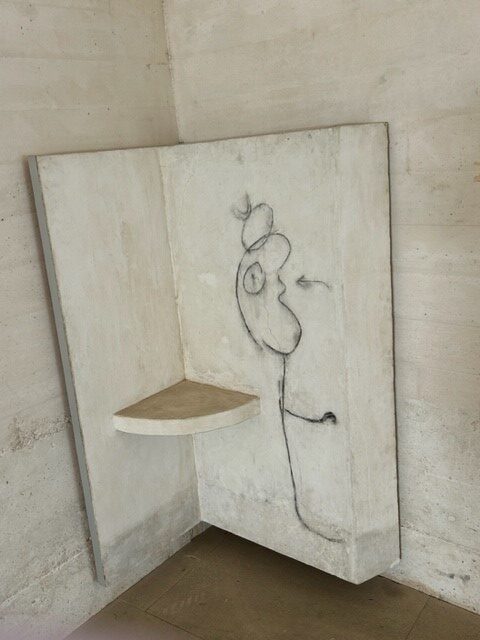
This is an example of one of his charcoal sketches on the walls of Son Boter.

This acrylic on canvas is called ‘Femme, oiseau’ and was painted in 1974. It is a fairly typical example of his paintings of the 1970s following some visits to Japan. It is very monochrome and focusses on the ‘eye’ representing the whole person. If you look carefully you can see a handprint – often found in his paintings – a sort of primitive signature.
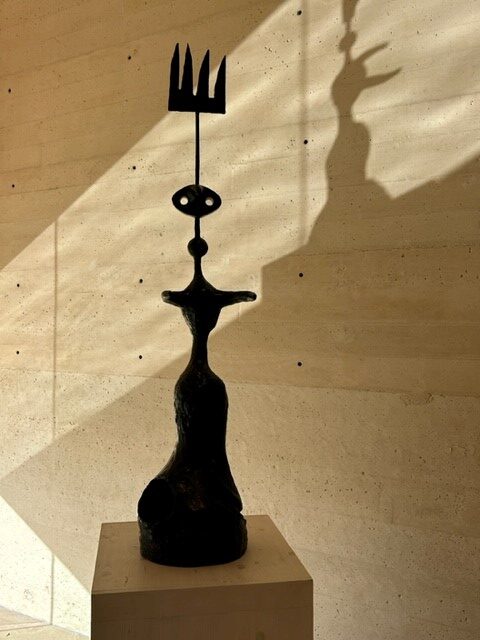
The bronze sculpture above was done in preparation for a 12 meter sculpture that is now in Barcelona. He loved doing major works for urban areas, breaking away from the confines of galleries and museums – taking his art to the people. This piece was the ‘prototype’ for ‘Sun, Moon and Stars’.
Miro once said “The works must be conceived with fire in the soul but executed with clinical coolness.” and I think that’s the feeling I came away with. I can’t pretend I understood his work, but I certainly felt the passion in his creativeness through the studios he created – rather more than in the finished art.