
JOIN JANE CONTINUING TO MAKE SENSE OF ART
And this month Jane is exploring the Kerala Murals of South India.
I have just returned from a fantastic trip to Southern India, in particular to Kerala, an area known as ‘God’s own country’. Two weeks of an assault on all the senses – amazing food, chaotic roads, colourful saris, jungle, back waters, coastline and of course fascinating art.
The old map below shows Kochi or Cochin where I started my trip and where I discovered the Kerala murals.
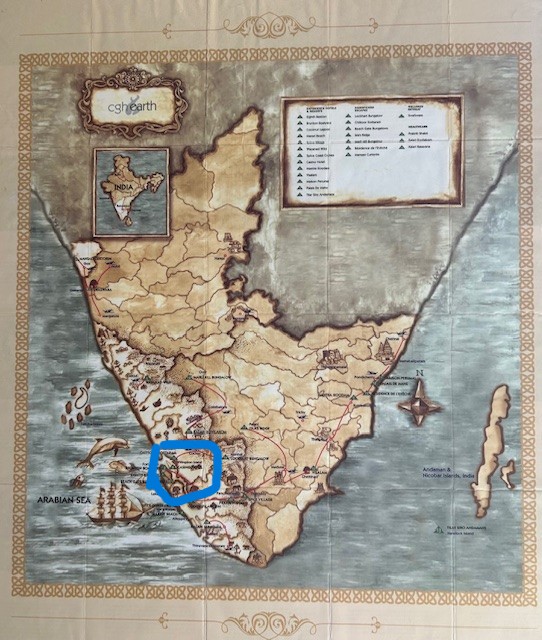
The Indian name for these murals is Keraleeya chumarchithram and they have been part of the Kerala culture for over 1000 years, used extensively to decorate the walls of temples. palaces and churches. The oldest example dates back to the 8th century and can be found in a cave temple in Tamil Nadu.
The ones I was lucky enough to see are in the Mattanchery Palace in the Fort Kochi area of Cochin and were probably painted in the 17th/18th centuries.
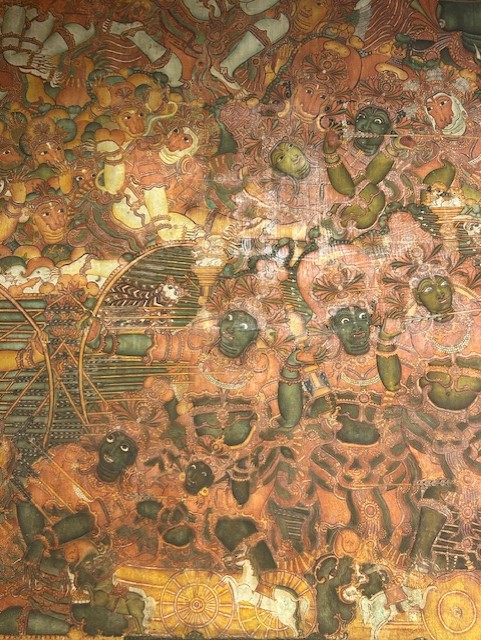
You may notice that the piece of mural shown above, has a very limited colour palette. This is a key feature of all Kerala Murals – they only use 5 colours which is called ‘Panchavana’. The base colour, ie the colour of the wall is white and the colours on top are yellow, red, green and black. All these colours are made from natural minerals and plants – including laterite, soot, indigofera (a plant) and lime.
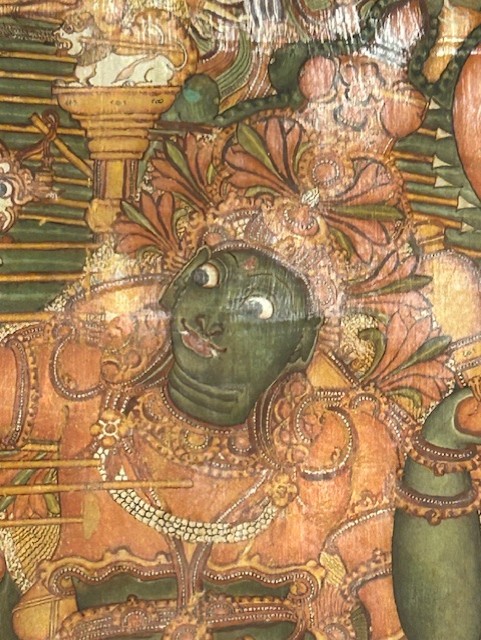
The painting technique is a system of layering. The artist starts with an outline sketch in red and then he applies several washes of yellow. Gradually the other colours are added. The last step is to finely outline everything in black, which they believe breathes life into the painting. This is a very distinctive feature of the Kerala Murals.
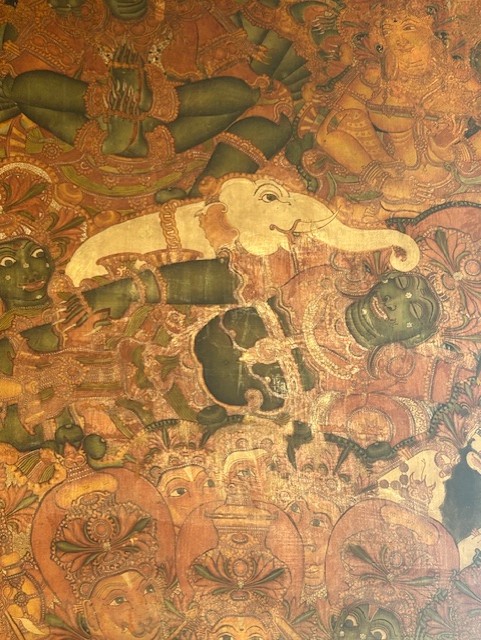
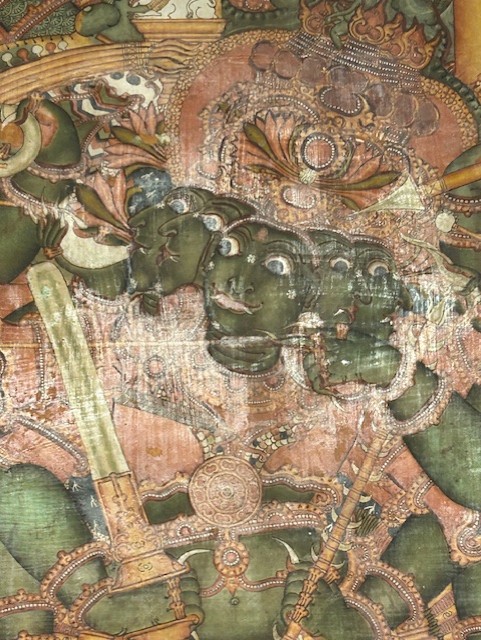
Kerala Mural painting is a sacred ritual, telling traditional stories to inspire and encourage spiritual expression. The paintings I saw at The Mattancherry Palace depict scenes from the Hindu epics – particularly The Ramayana and The Bhagavatha. It was wonderful to see them.