JOIN JANE CONTINUING TO MAKE SENSE OF ART
And this month Jane is looking at the different types of paint commonly used in art today.
A tour around most contemporary art galleries should be a feast for the eyes – I always hope for an overwhelm of colour and contrasts. There will probably be a range of subject matter, many different styles and mediums. This month I want to try to answer a question I have been asked several times – and it is this; What is the difference between oil paint, acrylic paint watercolour and gouache? This question then leads on to others – well how long does each one last? Will it fade? Does one need more skill than the others to use?
So this month we will look at the 4 main paints used by contemporary artists – oil, acrylic, gouache and watercolours. To be clear – I am not a painter – this is what I have learnt from the artists I meet.
1. Oil Paint.
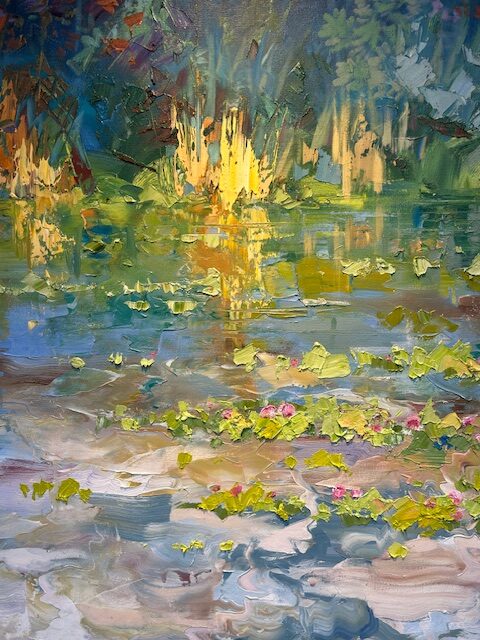
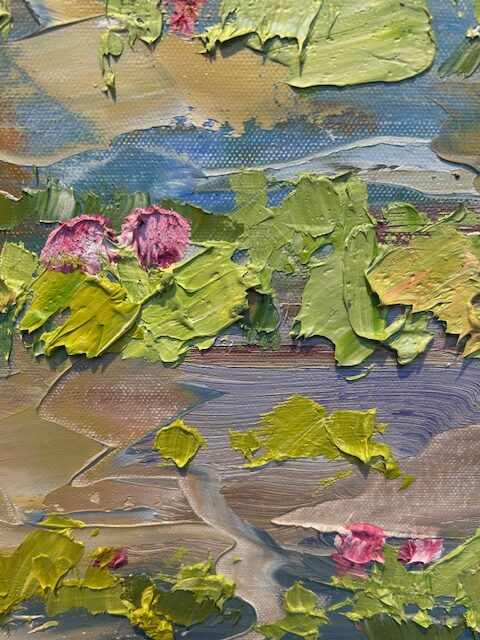
The painting above shows a vibrant contemporary oil painting by Paul Treasure. Oil paintings do not normally need to be under glass as they do not fade, which is why we have an amazing body of oil paintings going back many centuries. Oil paint was developed in the early Renaissance by combining finely ground colour pigments and then binding them with various oils – most commonly linseed, poppy and sunflower. The paint is sometimes bulked out with blanc fixe (chalk) or aluminium hydrate. It comes in tubes, or bars.
Oil paint takes a very long time to dry so it is easy to make changes and rectify mistakes – you can simply scrape it off and start again. Also once dry you can paint over it. The detail of the painting above shows many layers of paint that have been built up creating an almost 3D effect. The painting below shows oil used in a thinner way. This landscape has been finished with a glaze that reflects light.
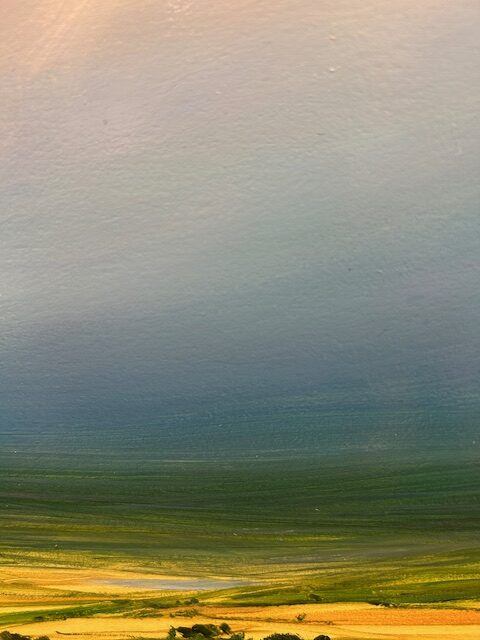
Both styles illustrate the great depth and richness of colour that can be achieved with oil paint.
2. Acrylic Paint.
Acrylic paint was developed in the early 20th century and became commercially available in the 1950s.
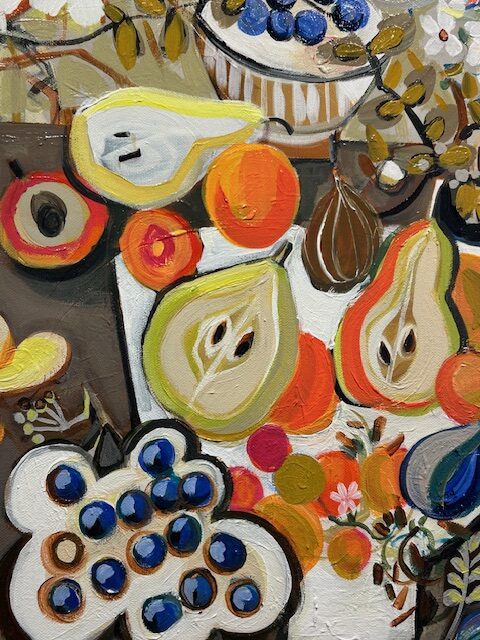
The colour pigments are bound with an acrylic resin that is water soluble and odour free. It is easy to use – just requiring some clean water. It dries very quickly and it comes in 3 forms – in a tube, in a tub and as a liquid that is more like ink. Acrylic paint can be used under oil paint, but not over it. Again acrylic paintings do not need to be under glass as they don’t fade.
3. Watercolour.
Watercolour paints date back to the ancient Paleolithic cave paintings but were not used much until JMW Turner and William Blake started using them – excited by the many different effects and textures they could achieve. The colour pigments are dissolved in a water based solution, with a binder like Gum Arabic. When used the water evaporates leaving the pigment in place.
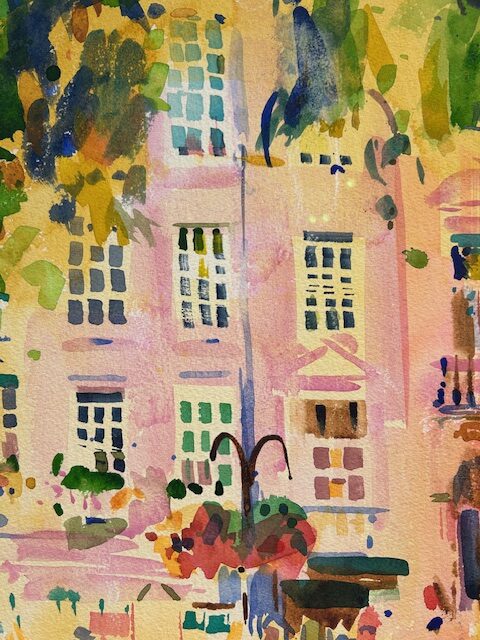
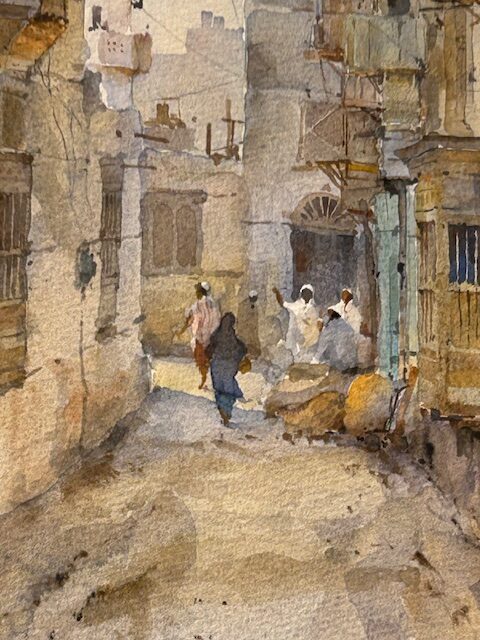
The two watercolours above are beautiful examples – demonstrating the transparency of the medium. Many artists enjoy using watercolours – it is less messy but it is also less forgiving. Mistakes are harder to rectify because it dries so quickly. Watercolour paintings need to be framed with glass, preferably UV filter glass to prevent fading.
4. Gouache
Gouache is a lesser known painting medium. It is similar to watercolour paint but blanc-fixe (a form of chalk) is added which gives the paint its opacity. Because it is opaque you can paint light colours over dark which you can’t do with watercolours. It remains water soluble when dry so it is easy to remove paint. Gouache is sometimes easily spotted as the paint film can crack as it dries. Also it is harder to achieve dark, rich colours in this medium.