
JOIN JANE CONTINUING TO MAKE SENSE OF ART
And this month Jane has been exploring the world of Making Sense of Art For Children.
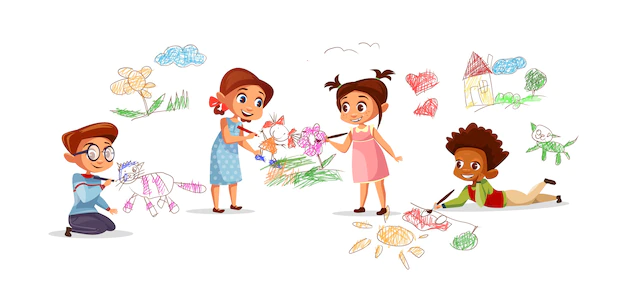
I’ve always thought that ‘Art Appreciation’ is a very stuffy, rather archaic term for something that is so exciting and relevant to our everyday thoughts and lives. We are surrounded by art – not only in our homes, but in our public spaces as well as in all sorts of unexpected places – for example the post box toppers during the pandemic and more recently for the Platinum Jubilee. We see statues, sculptures and murals in our towns and cities, and places of worship are full of diverse artworks covering so many different cultures.
So what is ‘art appreciation’? Basically it is the knowledge and understanding of the qualities that identify great art through the ages – techniques, styles and historical significance.
I believe that children are never too young to start appreciating art – in fact the earlier the better! At the Wykeham Gallery in Stockbridge we are starting a new initiative actively encouraging families to come in to the gallery on Sunday afternoons between 2 and 4pm. I will be there and will choose 2 or 3 artworks each week that I will explore with the children whilst the adults wander around the gallery – or listen in! I am a teacher with over 25 experiences teaching children between the ages of 2 and 13 and am passionate about the arts.
Let’s get away from the stuffy side and think about why bringing art appreciation into your children’s lives is beneficial.

The Benefits of Art Appreciation For Children.
Art appreciation encourages exploration, self expression, logical thinking, self esteem, imagination and creativity in us all. As adults we tend to do all these things quietly and within ourselves – children, however, (particularly primary age children) approach new things with excitement and exuberance and without the inhibition that has been programmed into many of us adults.
Children can learn to express their thoughts and feelings through art – this is particularly valuable for young children who are in the early stages of developing language skills. This also serves as a boost to social and emotional development as well as cognitive development. Young children now spend so much time on screens that we need to consciously make time for other activities that will enhance language and cognitive development.
When we talk about a piece of art with children, some very simple questions will encourage them to stop and really look, eg;
1. Tell me what you see.
2. How does it make you feel?
3. What do you think about it? Do you like it? Why don’t you like it?
4. Is there a story in this work of art? What do you think it is?
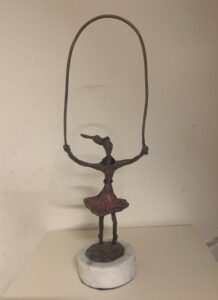
The 2 sculptures below are ideal pieces for discussion. The sculpture of the family – Where are they off to? Who have they met? What colours are their clothes etc. The little girl reading – What do you think she is reading? Where is she? Is she happy or sad? etc.
Of course, no answer is wrong – and that is very important for children to understand – that we all see the world in different ways. Being aware and understanding of other people’s ideas and opinions is a vital skill to learn as early as possible.


Of course it is also important to think about the basic elements of art – line, shape, colour and texture. This hopefully encourages children to be experiment with different styles and media in their own creativity.

So, parents, please don’t be afraid of taking your children into an art gallery – with a few questions up your sleeve you could enjoy some really interesting and rewarding conversations with your children – but keep it short and sweet! The children of today need productive time away from screens!
Alternatively, if you are in the Stockbridge area, join me me on Sunday afternoons between 2 and 4pm and we can all ‘Make Sense of Art For Children’.
