
JOIN JANE CONTINUING TO MAKE SENSE OF ART
And this month Jane learnt about Picture Framing
The choice of a frame can make or break a piece of artwork- it’s as simple as that! So, the art of framing is a skill that should not be underestimated.
There is evidence that picture frames first existed between AD 50 – 70 in Egypt – examples have been found in the tombs of the wealthy Egyptians. The first hand carved wooden frames date back to the 12th Century and in fact for several centuries, the picture frame was created before the painting that it was going to frame – such was the importance of the frame.
Nowadays we use frames to complement the artwork. It serves to separate the picture from the reality of the viewer – almost as a transition between one world and another. It should also harmonise with the interior where it will hang as well as the practical aspect of protecting the artwork.
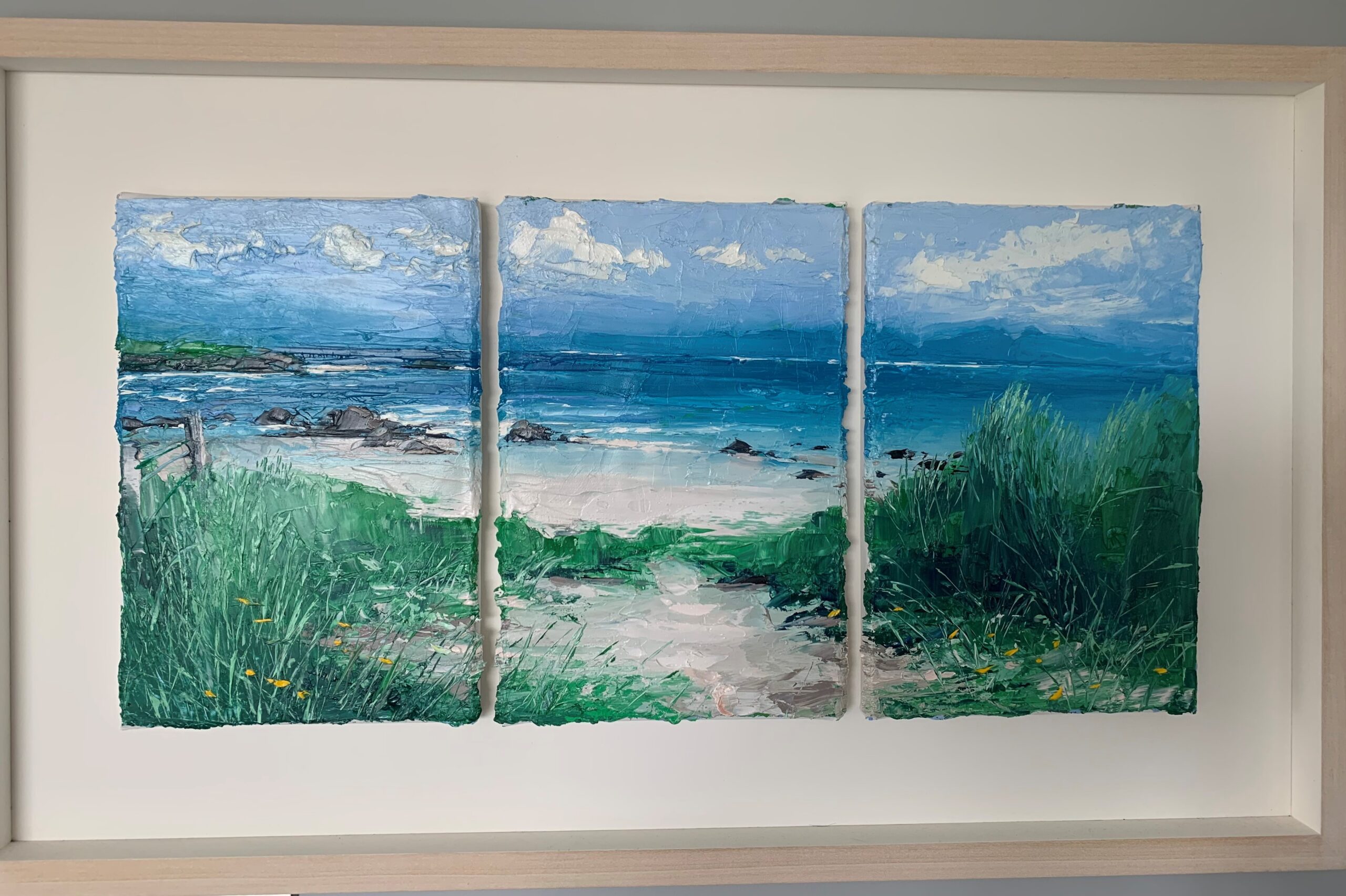
The following example is a triptych by Colin Carruthers – 3 panels in oil, set in a simple tray frame with a fairly wide off white surround which gives the bright colours of the oils the chance to really ping out of the painting .
There are a couple of rules when it comes to framing –
1. Oil paintings on canvas, panel or board should not go under glass because oil paint is not affected by moisture or UV rays.
2. Any work on paper, or work using pastels, watercolours, pencil or charcoal need to go under glass as they will be affected by moisture and UV rays – and the artwork needs to be protected from fading. There are also different types of glass to consider – normal or the more expensive non reflective glass which will do a better job of preventing fading.
Artwork under glass needs further protection in the form of mounts (sometimes called ‘mats’). These are the heavy card surrounds that sit in the frame around the picture. They are essential because they add space between the glass and the picture which allows air circulation and prevents condensation that would eventually become mould. Choosing the colour and width of the mount is as important as the choice of frame. Fantastic effects can be achieved with double and triple mounts creating greater depth into the painting.
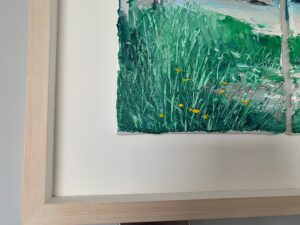
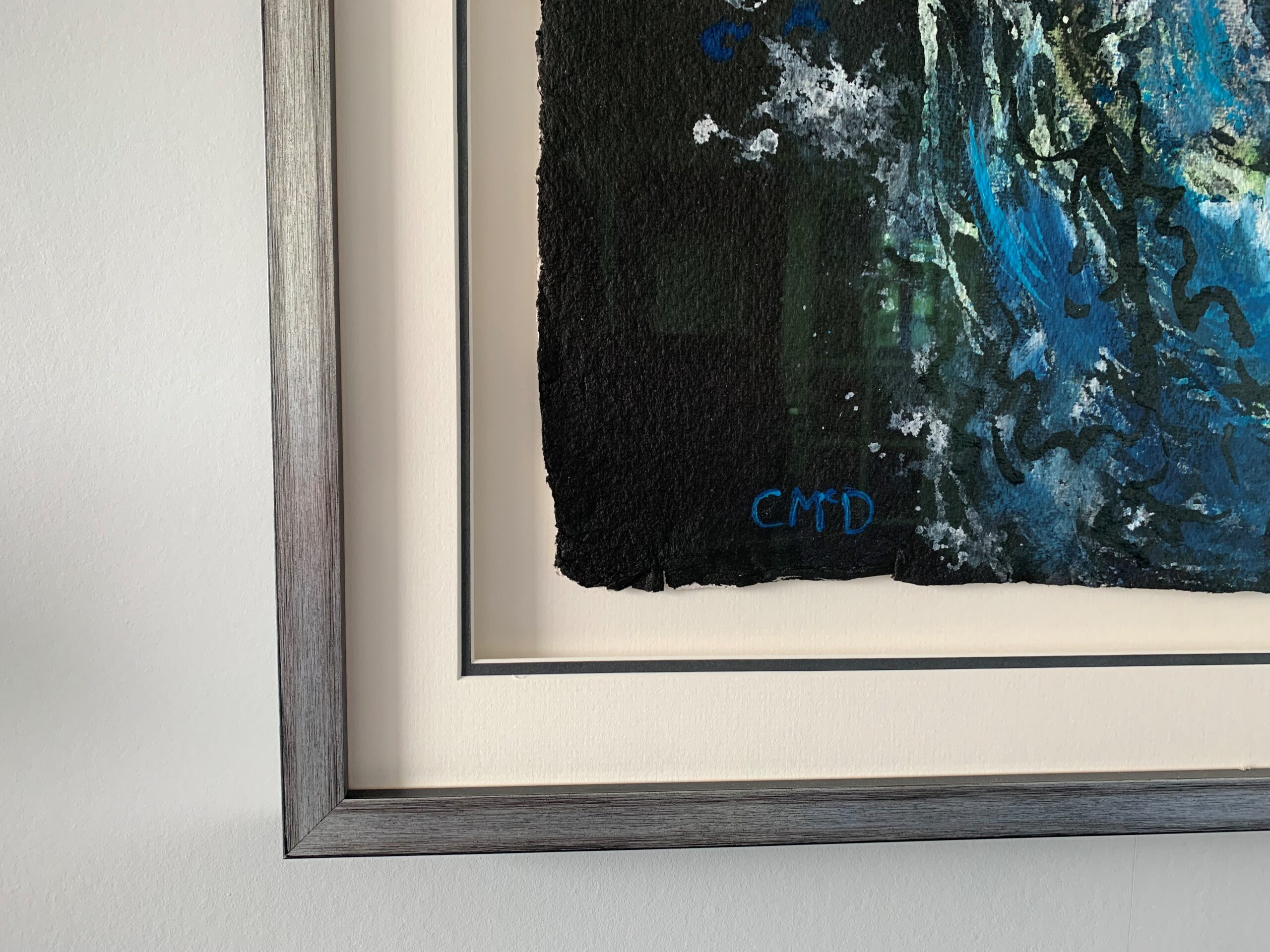
Floating a painting is also very effective. I have done this a few times with paintings that have been done on interesting paper – rice paper and rag paper. On these I felt that the texture of the paper was an integral part of the painting and I wanted to be able to see the rough textured edges of the paper. In these the paper is stuck on to raised blocks giving the impression that the painting is floating under the glass. This of course needs a much deeper frame. Here are two examples. The first is on rag paper and has a double mount around it – an off white with a thin charcoal line, the second is on rice paper and has a very plain wooden frame with no mount – just a hessian effect backing.
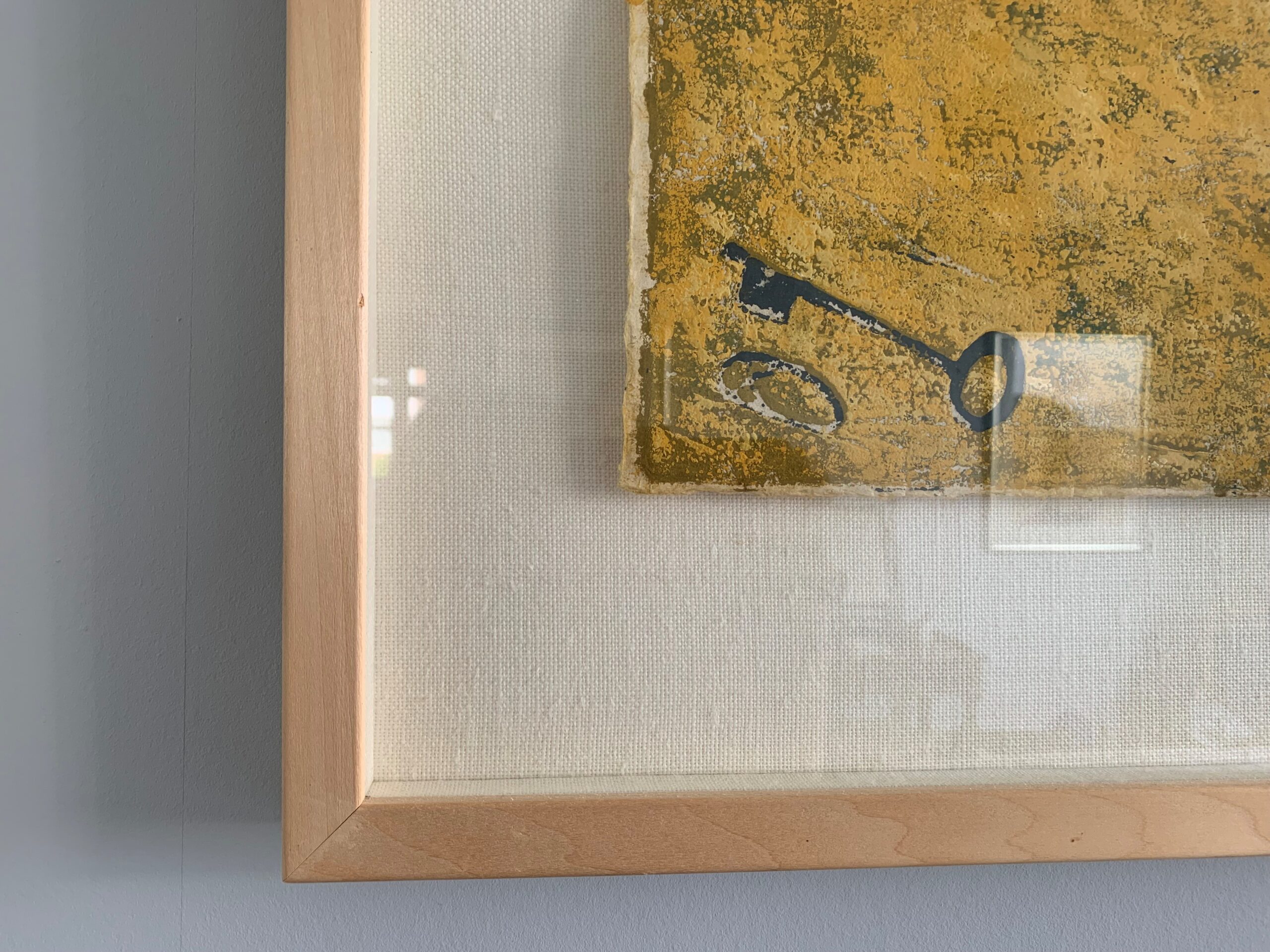
A shadow box is an even deeper frame used for objects rather than pictures – an effect way of displaying collections of small things like medals, buttons etc.
There is a bit less to think about when framing an oil painting – no glass is necessary and neither is a mount, although a mount can be used for its decorative effects. Tray framing is currently the most common frame for contemporary oil paintings. As its name suggests the canvas or board sits inside an often very plain wooden surround/tray. This simplicity keeps the focus on the artwork.
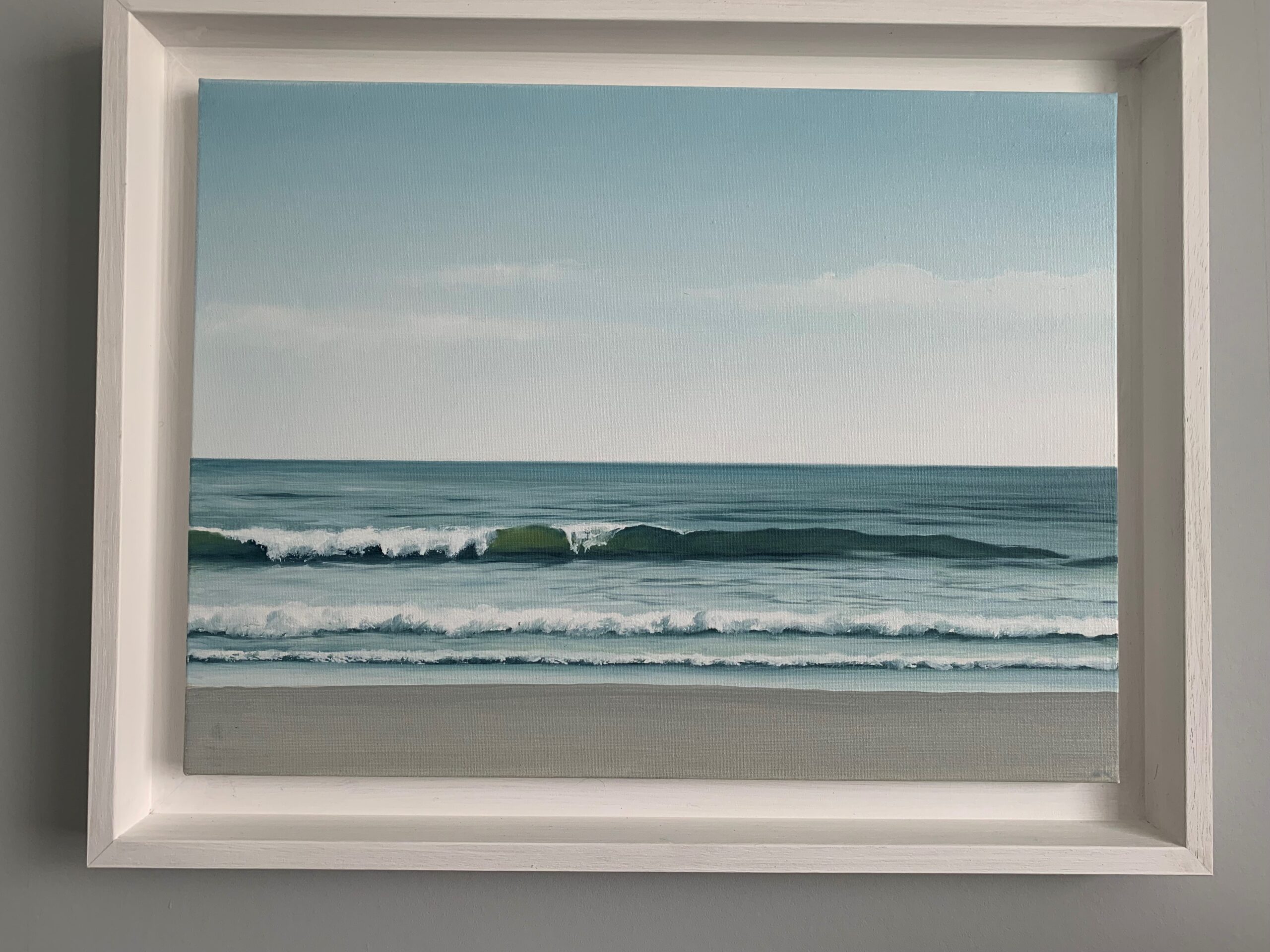
Other options are surround frames that sit on the edge of the board/canvas and these go from simple to extremely ornate – think of the frames around 17th and 18th century paintings in galleries such as The National Gallery etc. They can add a sense of grandeur and stage presence appropriate to their surroundings!
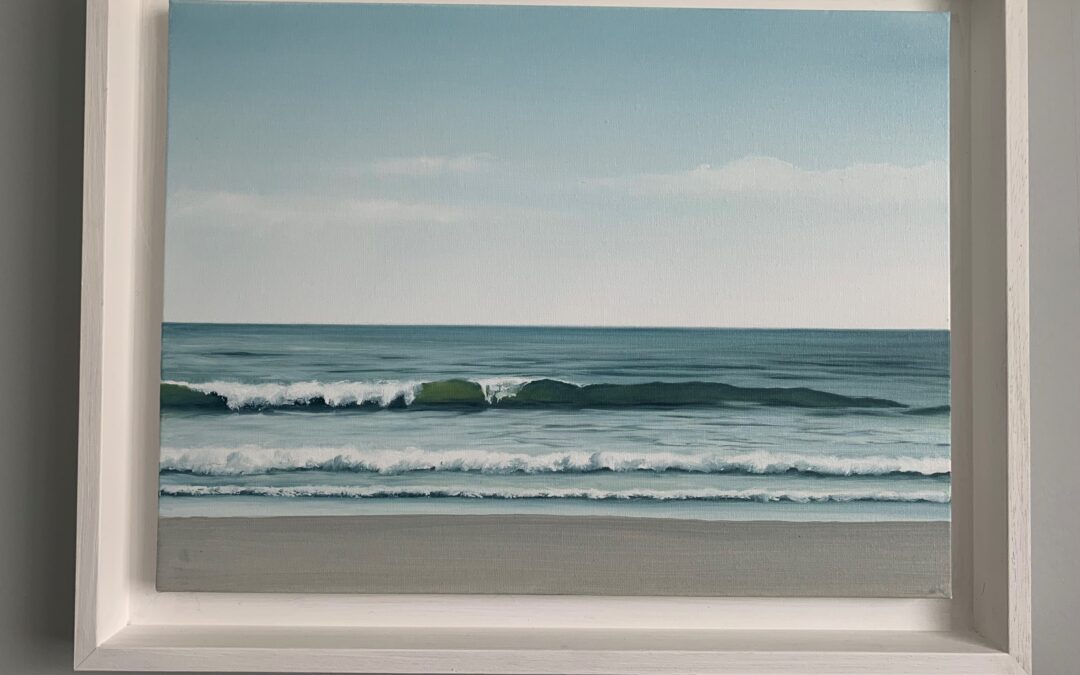
The following is a simple little oil painting that has a wider more complicated wooden tray frame that draws the eye into the painting.
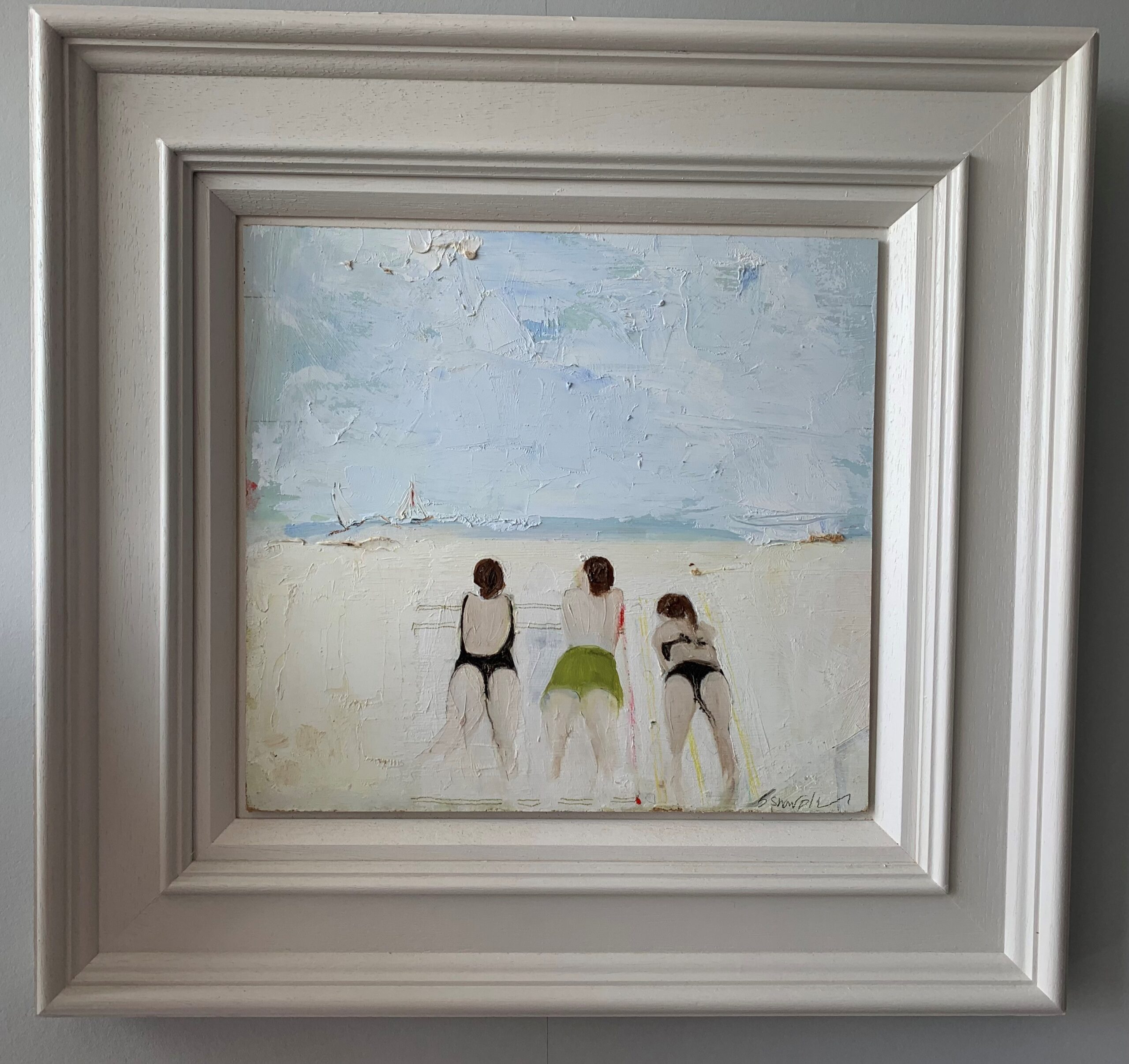
However you frame a piece of artwork you have to remember it will considerably increase the size. Art bought from a contemporary art gallery usually comes framed – but when viewed online you will see it unframed and the measurements provided will be of it unframed – so it is very important to ask for a photograph of it framed – with the framed measurements.
Contemporary artists often use a generic frame for all their work. It is part of their branding and it certainly looks good in an exhibition setting – but it may not be a frame you like or that goes with the setting you want to place it in. If that is the case – and you really love the picture it is always worth thinking about reframing.
And on that note – if you are moving house or changing your decor, consider reframing the pictures you have had for ages – it really does give them a new lease of life and enables you to fall in love with them all over again!
If you need help or advice with reframing, please don’t hesitate to get in touch.
Recent Comments